Filing, simplified.
Plain-English guides to GST, income tax and compliance for Indian businesses, written by the Experts who file them every day.
 GST
GST registration and return filing in India: the 2026 guide
Who needs GST registration, how to get your GSTIN, and how GSTR-1, GSTR-3B and the annual return actually work.
 Income Tax
Income tax return (ITR) filing in India: forms, deadlines and deductions for 2026
Which ITR form applies to you, the old vs new regime maths, and the deductions worth claiming.
 Company
 registration in India: Pvt Ltd, LLP or OPC in 2026
The right structure for your business, what incorporation involves, and the annual ROC compliance that follows.
 Registrations
MSME, IEC, Trademark and FSSAI: the business registrations you actually need
A plain-English guide to Udyam/MSME, Import Export Code, trademark and FSSAI, and what each one unlocks.
 Tax tips
5 deductions every freelancer misses on their ITR
From home-office costs to 80C and health premiums: the write-offs that quietly add up.
 Compliance
TDS on rent: limit, rate and how to pay
TDS on rent is 2% when rent is above ₹50,000 a month and you pay as an individual. Businesses deduct 10% on buildings. Who deducts, when, Form 141, no PAN.
 Starting up
LLP or Private Limited in 2026? A founder's decision guide
Liability, compliance load, funding and tax, compared side by side for early-stage teams.
 GST
How input tax credit actually works
The matching, the conditions, and the common mistakes that block your credit.
 Accounting
Bookkeeping habits that save you at audit time
Small monthly routines that turn a stressful audit into a non-event.
 GST
GSTR-9 annual return: due date, who must file, turnover limit and late fee
GSTR-9 for FY 2025-26 is due on 31 December 2026. Who must file, the ₹2 crore exemption, when GSTR-9C applies, and how the late fee works.
 GST
GSTR-9 and GSTR-9C: difference, applicability and turnover limit
GSTR-9 is the annual return. GSTR-9C reconciles it with your audited accounts when turnover is above ₹5 crore. Turnover table for both, by year.
 GST
How to file GSTR-9 online: step-by-step guide with tables and errors
How to file GSTR-9 on the GST portal, step by step: checks before you start, Tables 6, 8 and 13, the offline tool, nil returns and errors.
 GST
GST registration documents list
Documents for GST registration, by business type and by who owns your premises. One address proof is usually enough, and limits apply to what officers can ask.
 GST
GST registration turnover limit: who needs to register
The ₹40 lakh and ₹20 lakh limits, the states where they are lower, and the cases where you register whatever your turnover.
 GST
GST registration certificate: how to download the PDF (Form REG-06)
Log in to gst.gov.in and download Form GST REG-06 as a PDF in five steps. What each field means, and why there is no official route without a login.
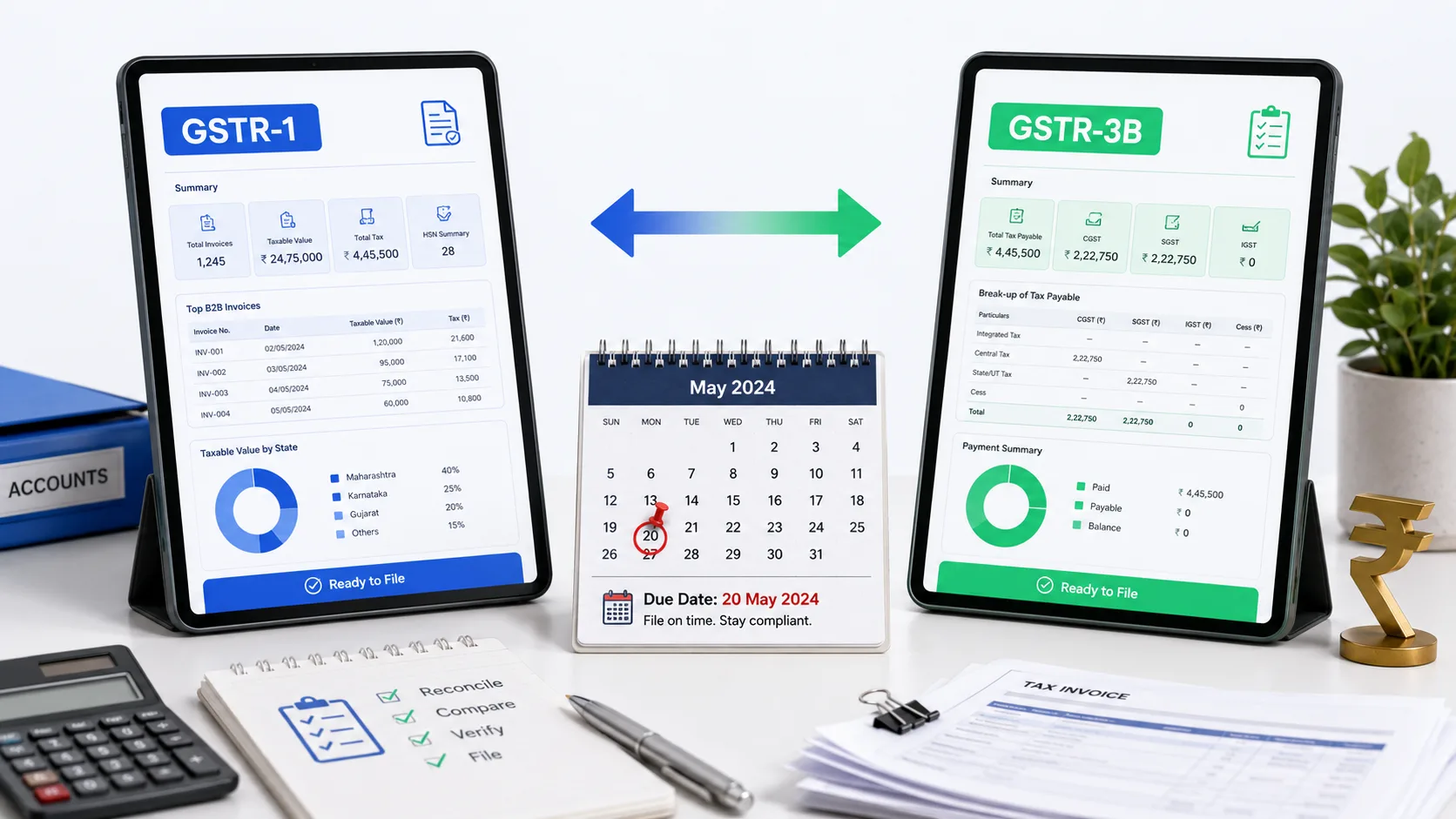 GST
GSTR-1 vs GSTR-3B: what each GST return is and how they differ
The two returns that run your GST month, what goes in each, why they must match, and the due dates to remember.
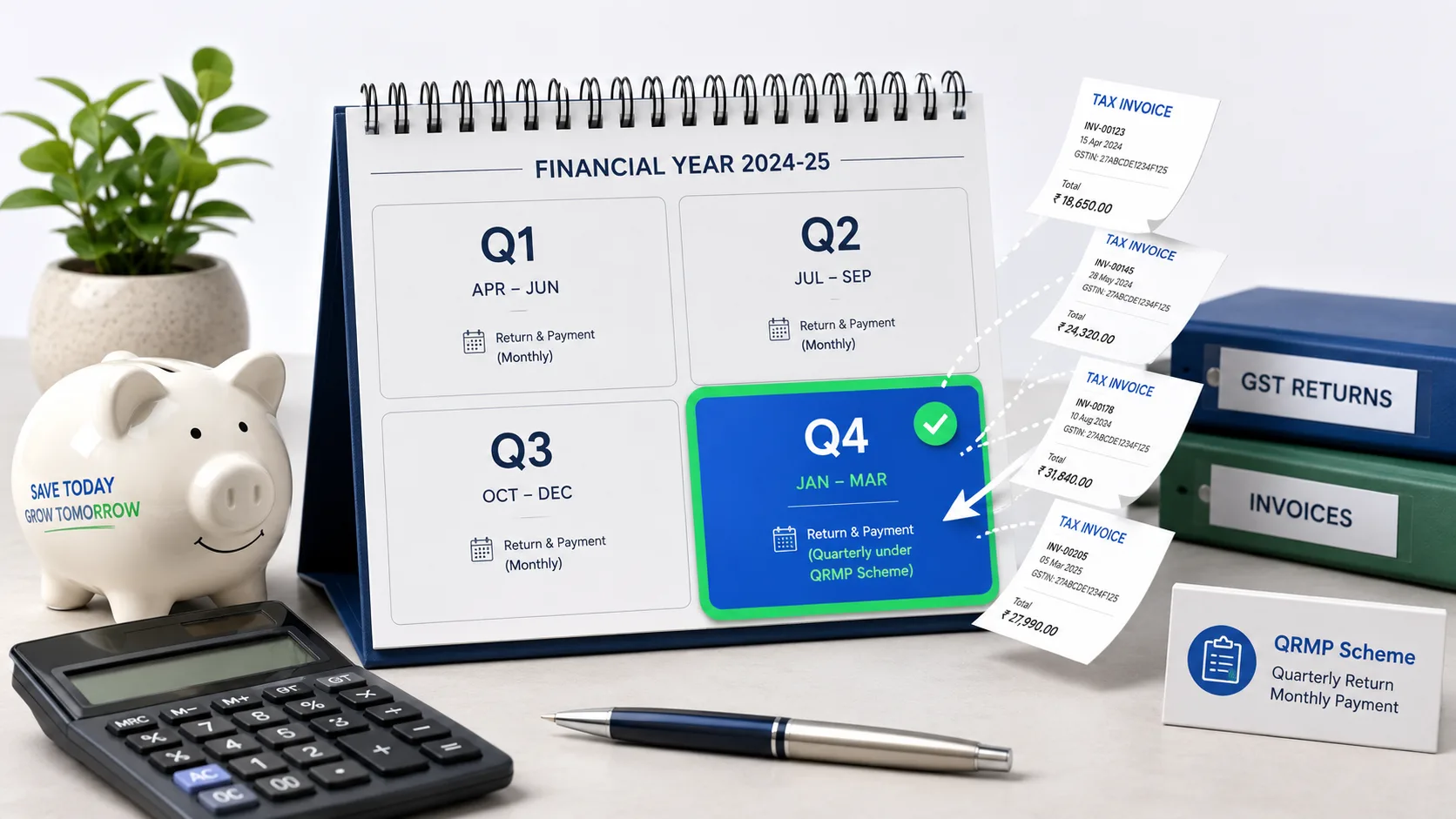 GST
QRMP scheme in GST: who can use it, how to opt in, IFF and monthly payment
QRMP lets small GST businesses file GSTR-1 and GSTR-3B every quarter but pay tax monthly. Who can join, opt-in dates, the 35% challan and IFF, in simple steps.
GSTGSTR-9C: meaning, applicability, turnover limit and how to file
GSTR-9C is the self-certified reconciliation statement filed with GSTR-9 when aggregate turnover is above ₹5 crore. Who files it, format, due date and steps.
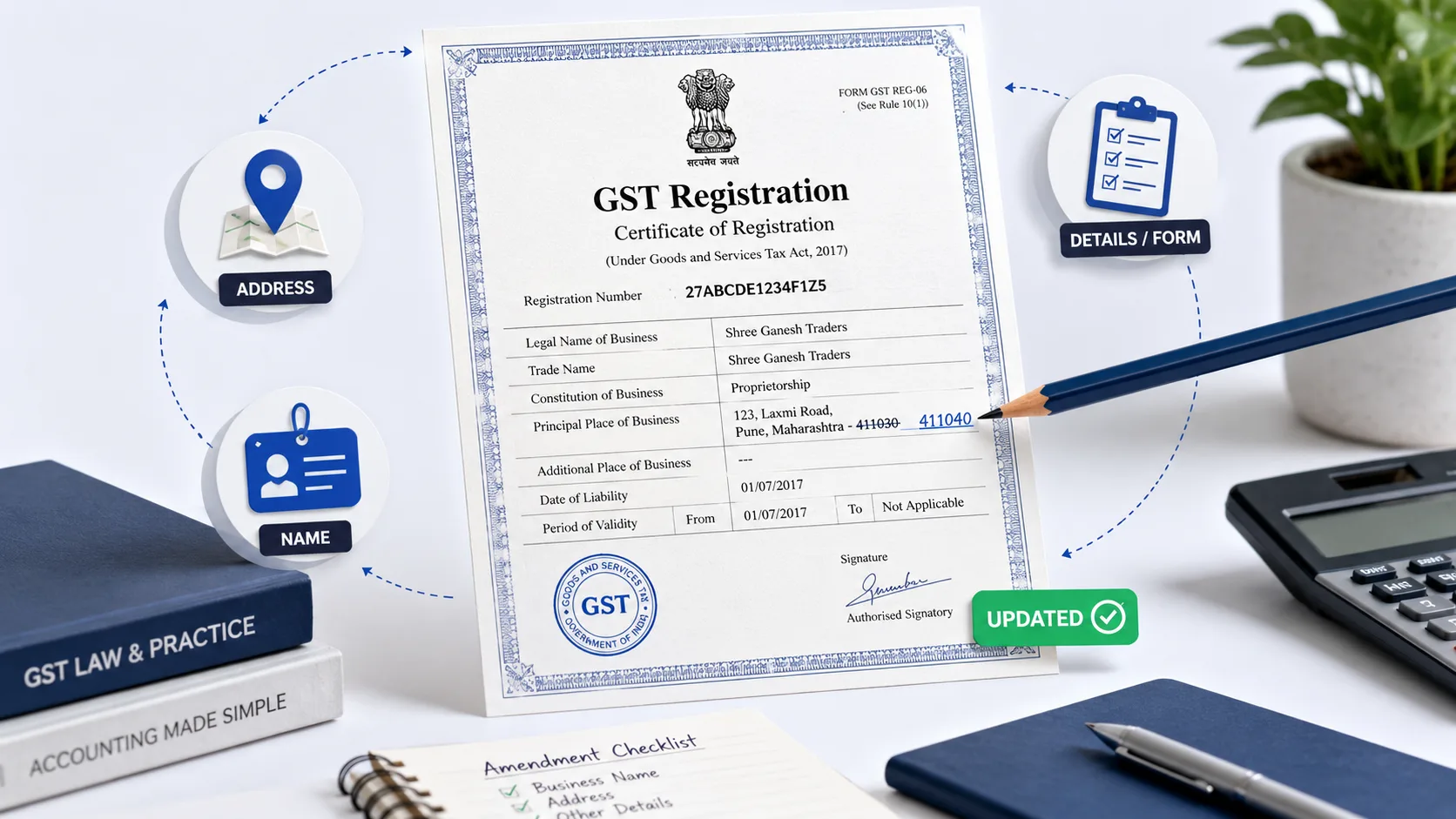 GST
GST registration amendment: how to change address, name, mobile and email
File Form GST REG-14 within 15 days of the change. Address and legal name changes need officer approval; mobile, email and bank changes update at once.
 GST
Core vs non-core GST amendments: what needs officer approval
Some GST changes are instant, others need approval. Here is how to tell core from non-core amendments.
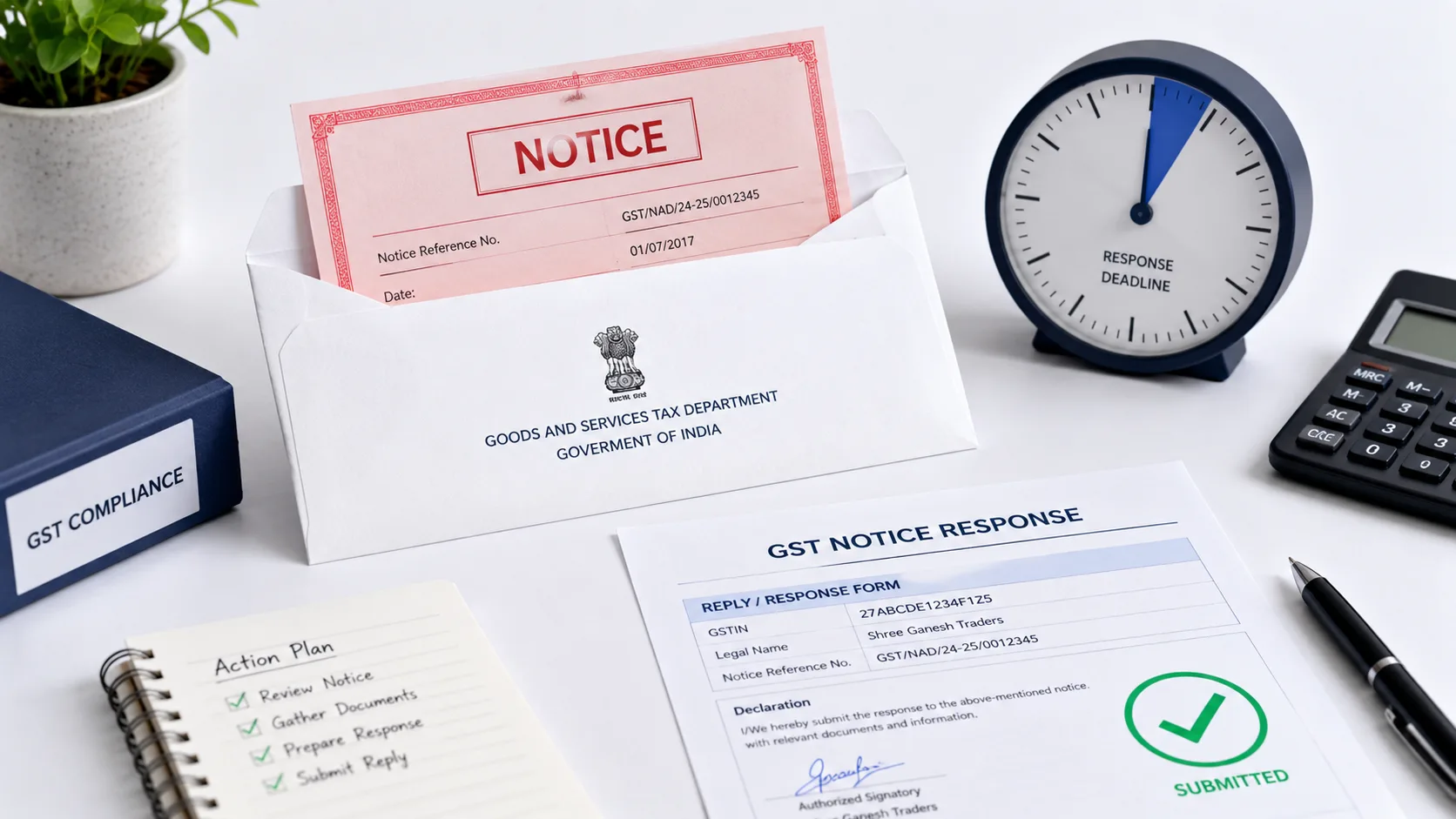 GST
Received a GST notice? Types, deadlines and how to respond
From GSTR-3A to show-cause notices, what each GST notice means and how to reply before the clock runs out.
 GST
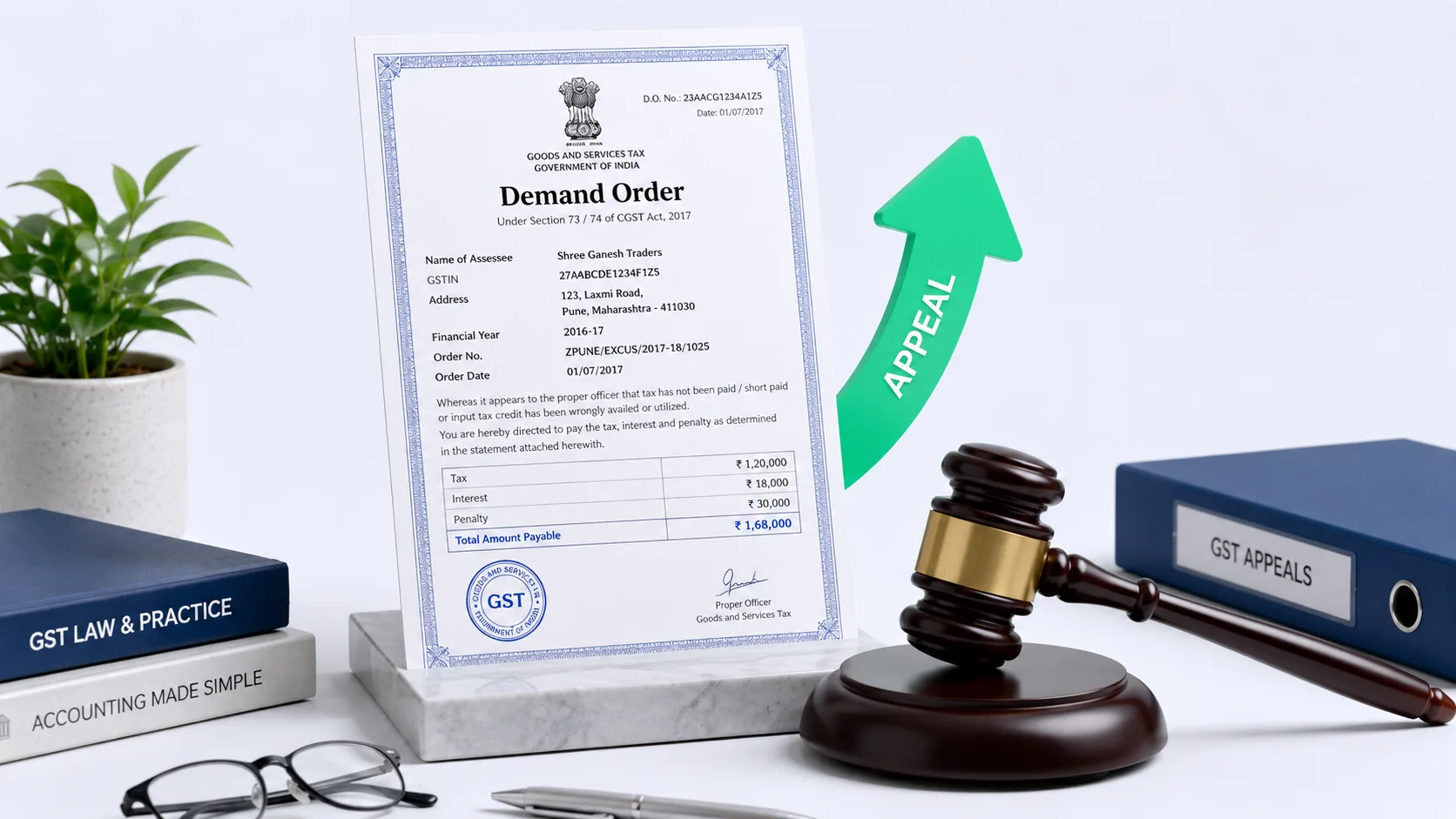
GST appeals: how to challenge a demand order
Disagree with a GST demand? The appeal process, the pre-deposit, and the deadlines that decide your case.
 GST
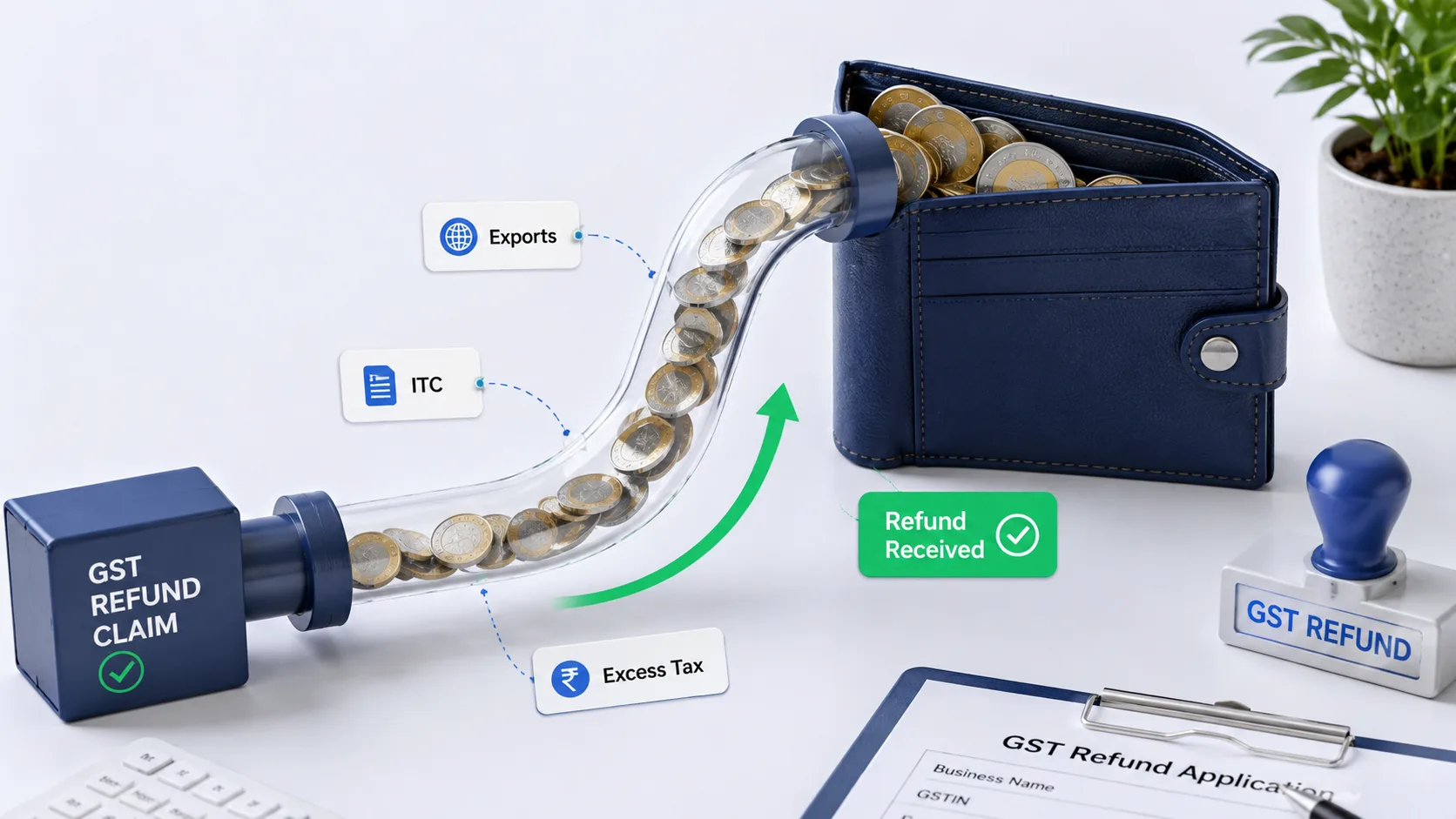
How to claim a GST refund: exports, ITC and excess tax
The three most common GST refund cases, the RFD-01 process, and how to actually get the money back.
 GST
LUT under GST: how exporters can supply without paying tax
The Letter of Undertaking lets exporters skip IGST on exports. Who can file, and how to do it each year.
 GST
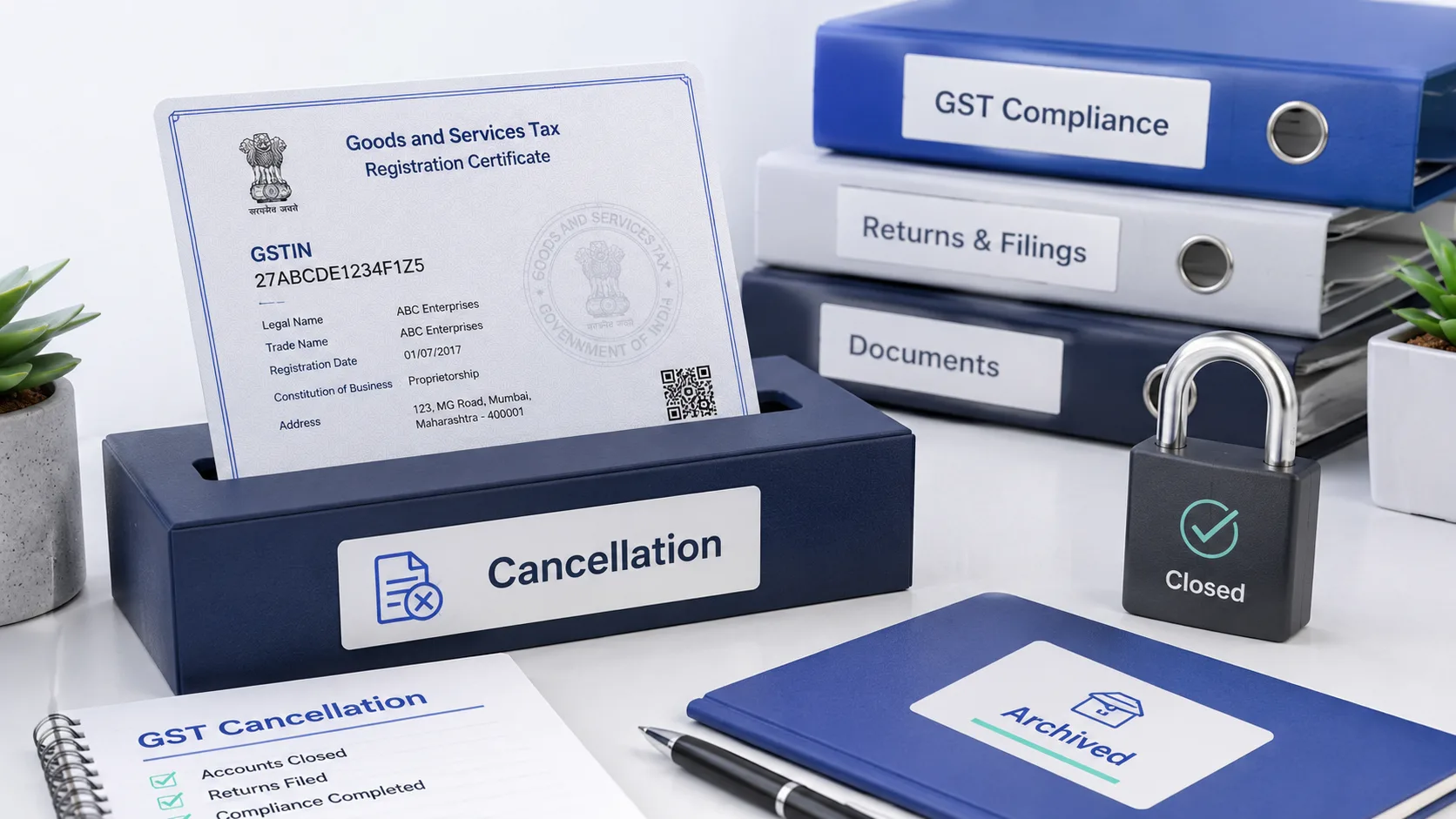
GST cancellation: how to surrender your GSTIN correctly
Closing a business or below the threshold? How to cancel your GST registration without leaving loose ends.
 GST
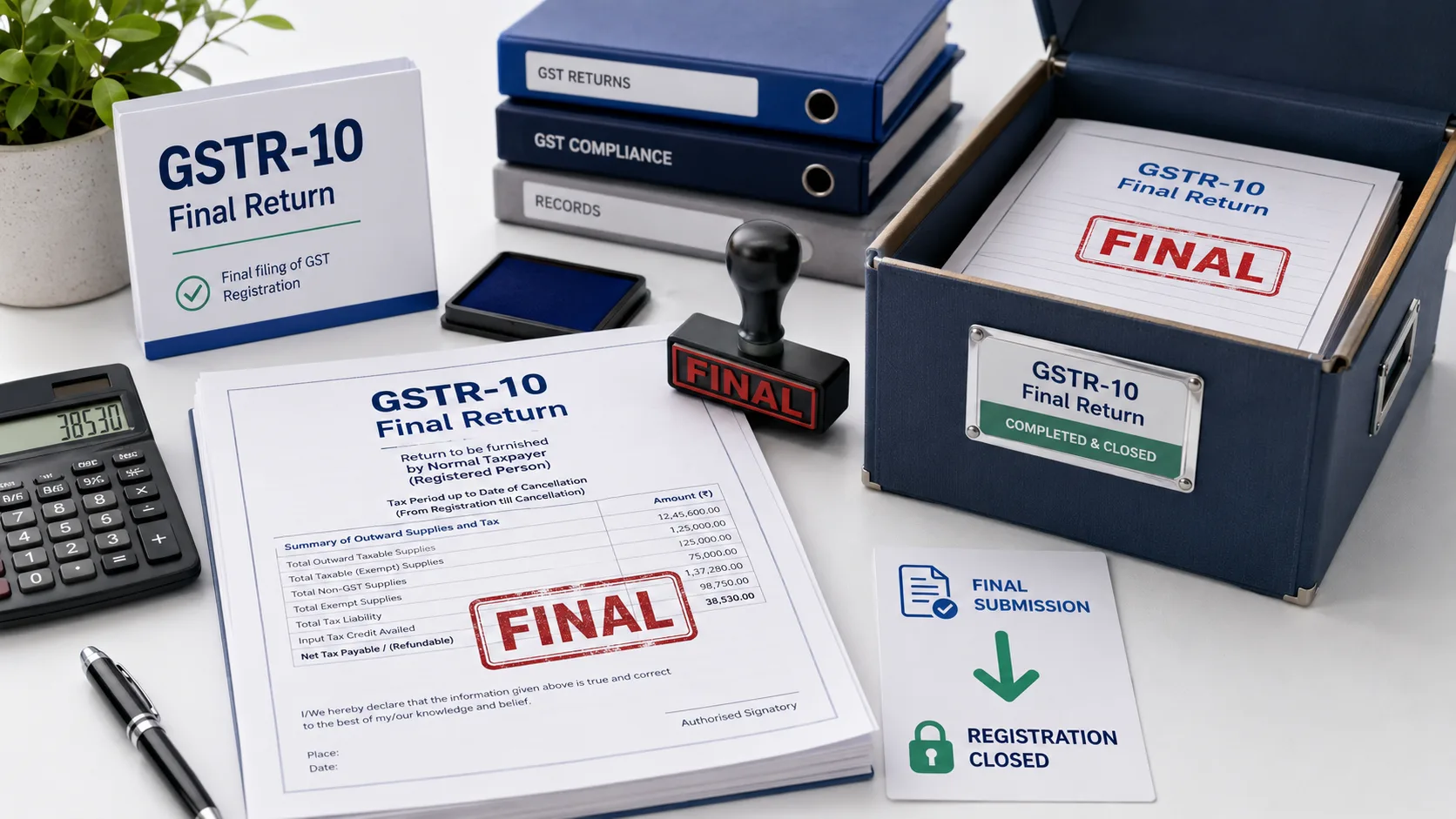
GSTR-10 final return: closing your GST registration properly
The last return after GST cancellation, what it covers, the deadline, and why skipping it costs you.
 GST
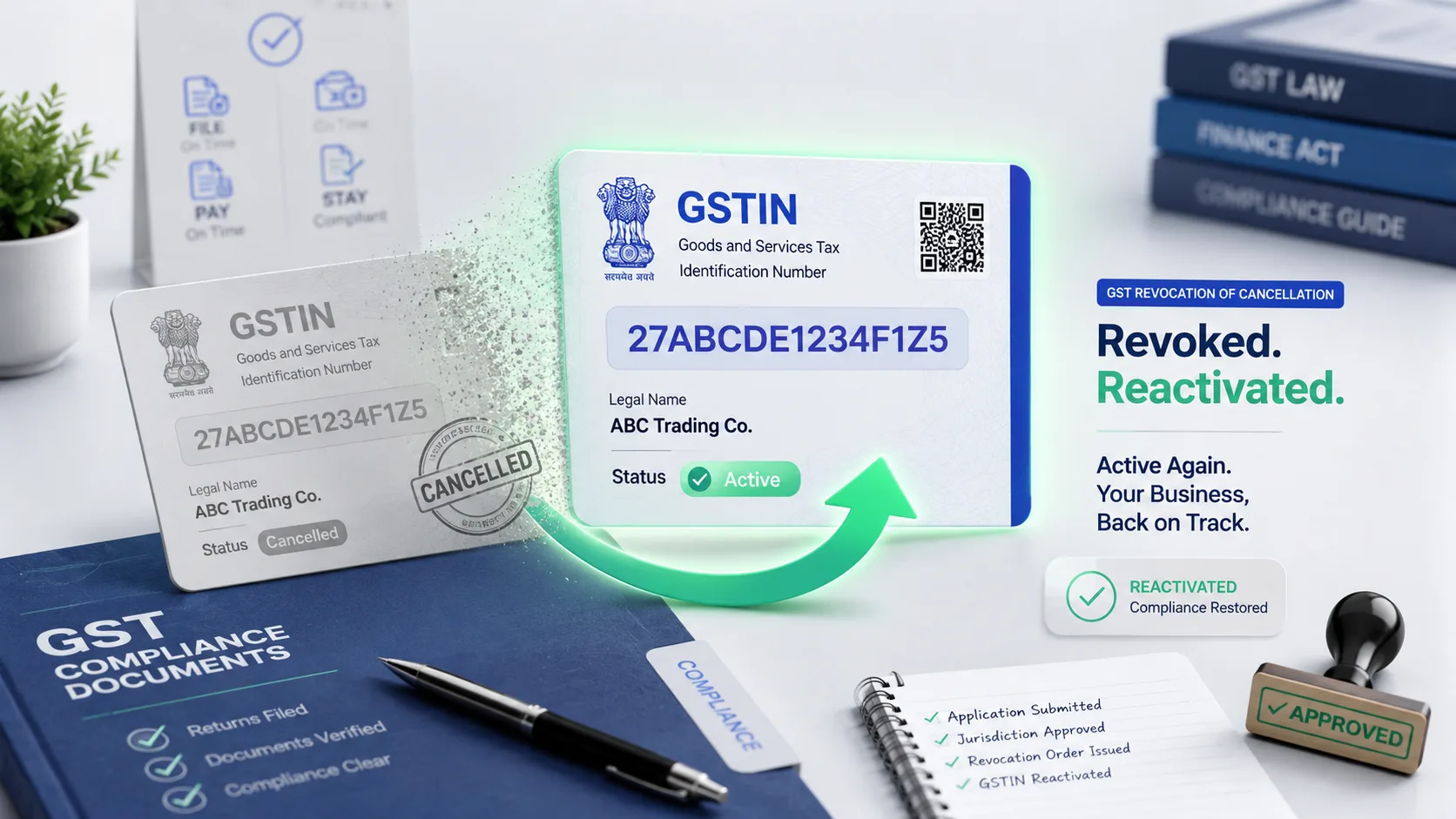
GST registration cancelled by the officer? How to revoke it
If the department cancelled your GSTIN, revocation can bring it back. The window, the process and the pitfalls.
 GST
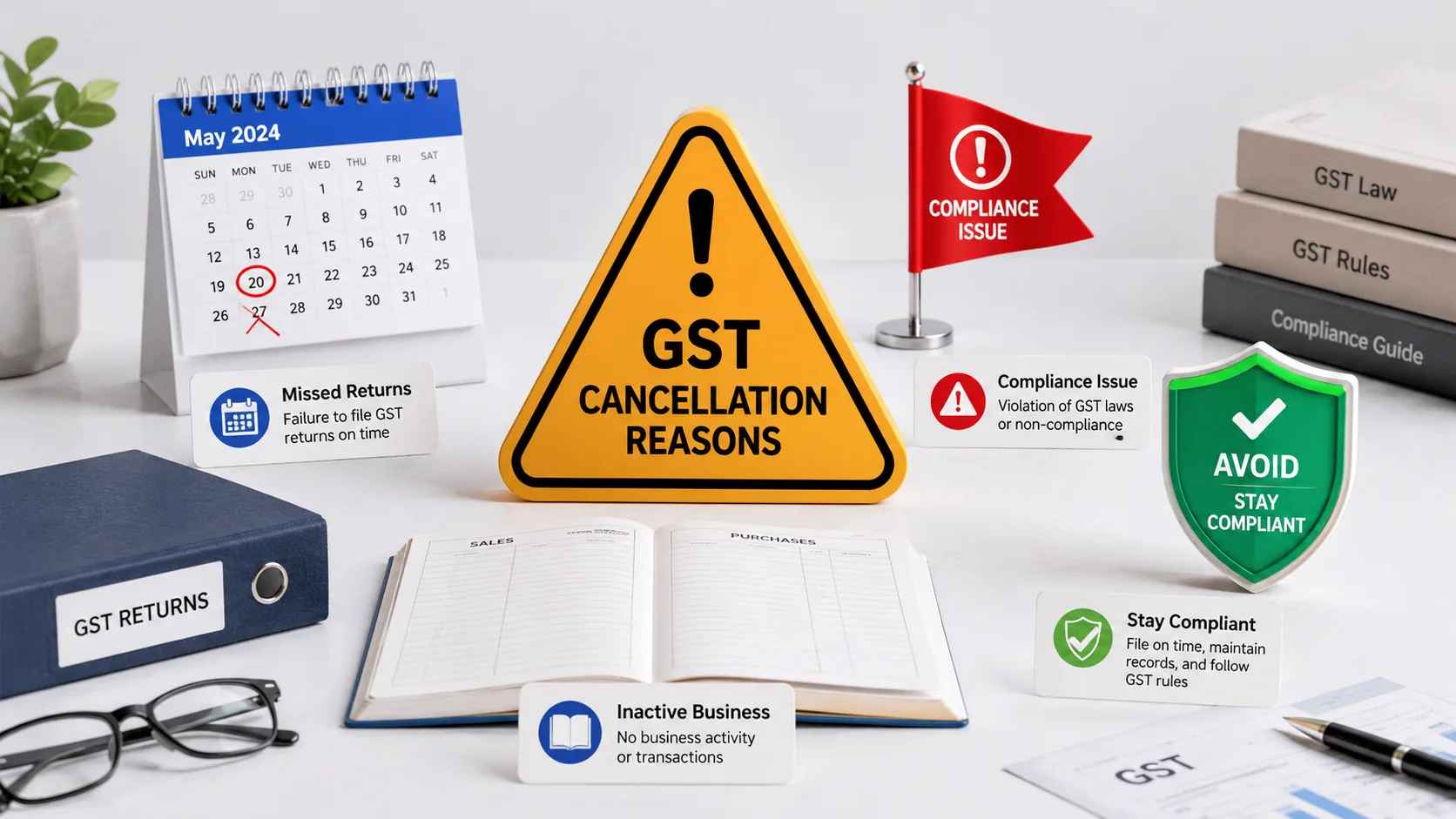
Why GST registrations get cancelled, and how to avoid it
The common reasons the department cancels a GSTIN, and the simple habits that keep yours active.
Income TaxIntimation under section 143(1): what it means and what to do
An intimation under section 143(1) is the result of processing your ITR. See what it means, how to open the PDF and what to do if it shows a demand.
Income TaxIncome tax scrutiny notice under section 143(2): what to do
A scrutiny notice under section 143(2) means your ITR was picked for a detailed check. See the time limit, how scrutiny assessment works and how to reply.
 Income Tax
Income tax reassessment: section 148 and 148A notices explained
A 148 notice reopens a past year's assessment. What 148A and 148 mean, the 3 and 5 year time limits, and how to reply, under the rules in force since Sep 2024.
 Income Tax
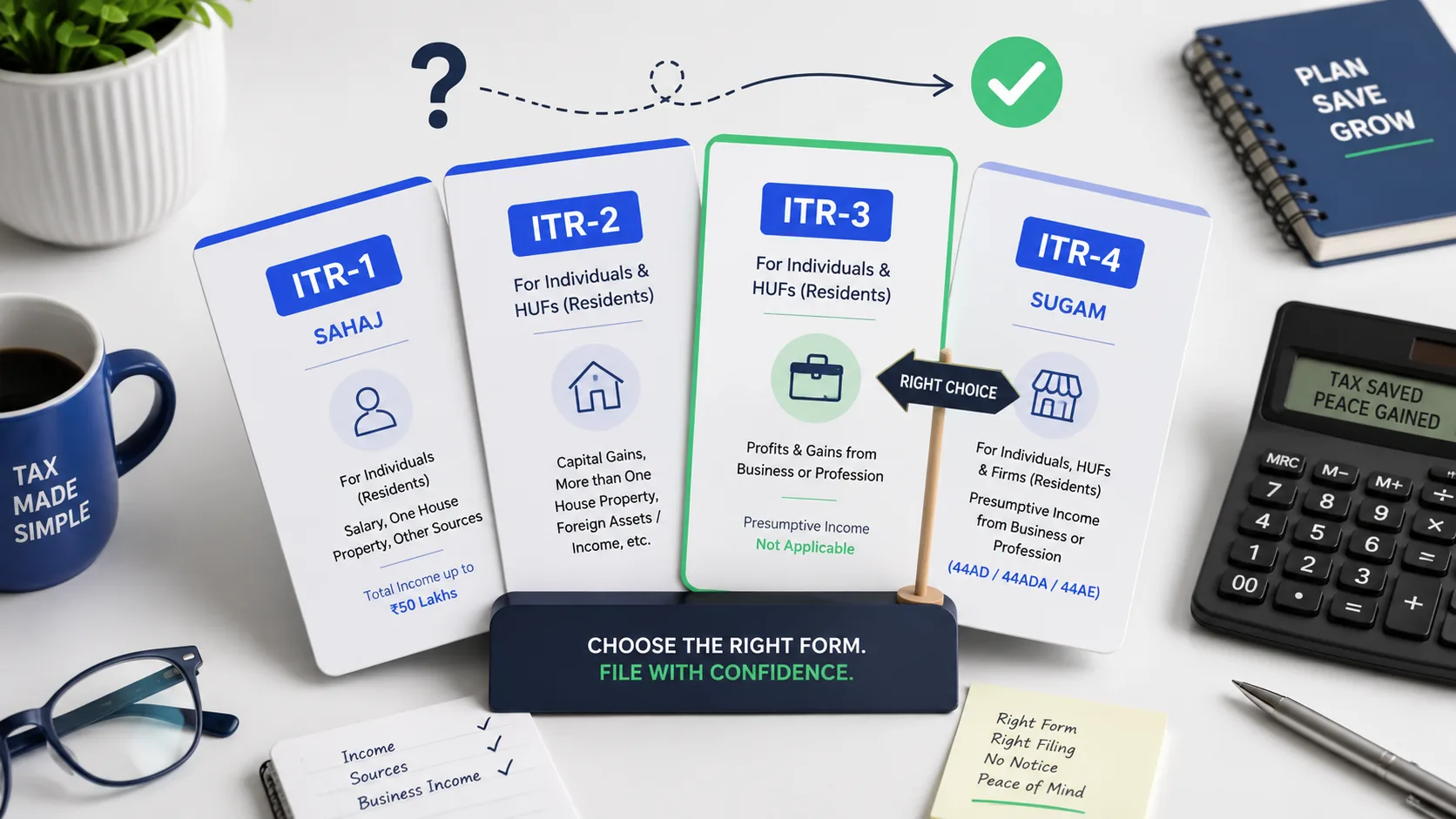
Which ITR form to file? ITR-1 to ITR-7 for AY 2026-27
Salary, rent, capital gains or business income? See which ITR form fits you for AY 2026-27, the difference between ITR-1, 2, 3 and 4, and forms 5 to 7.
 Income Tax
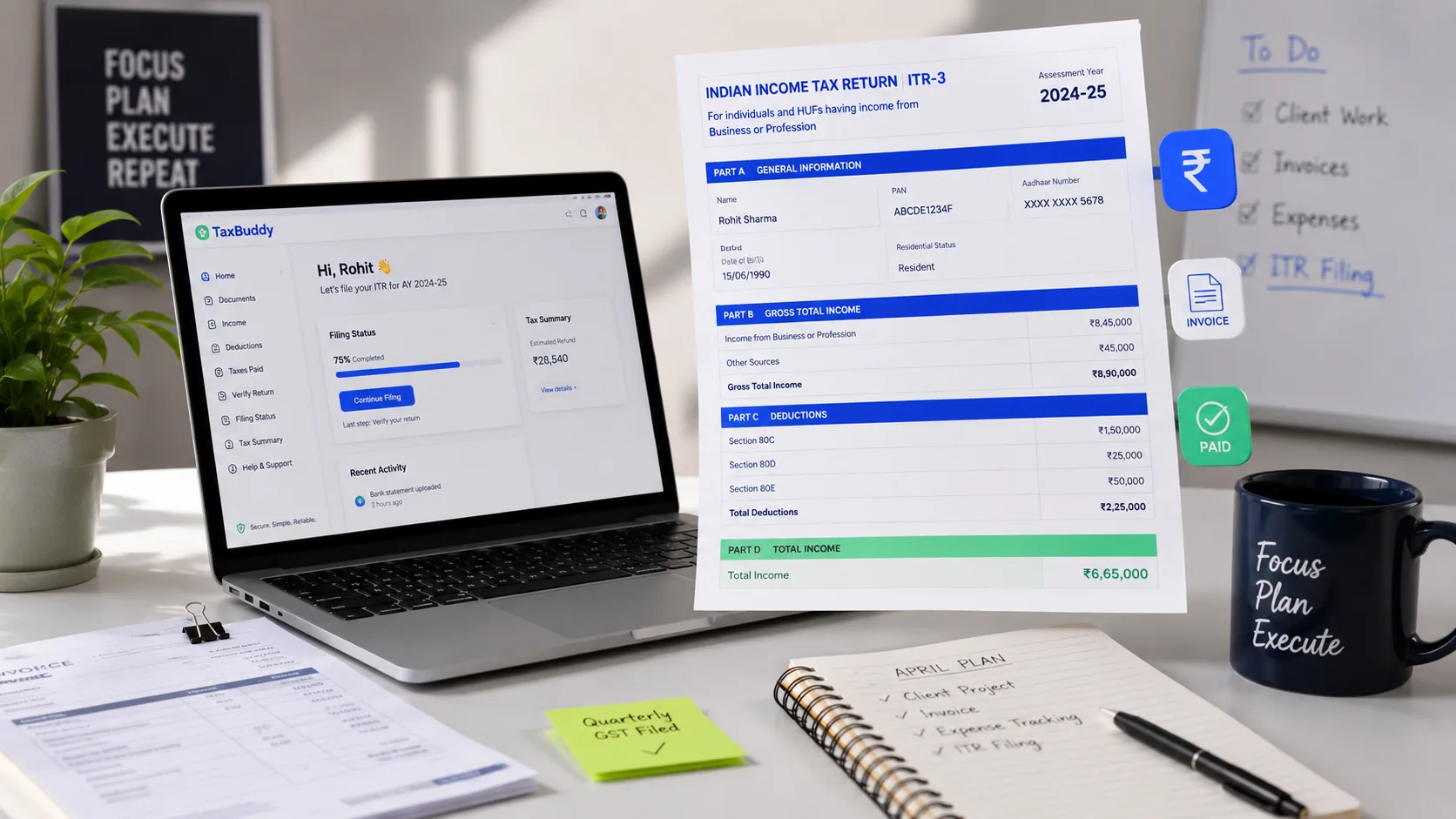
What is ITR-3? Who can file it and how to file it online
ITR-3 is the return for individuals and HUFs with business or profession income, including F&O and intraday trading. Who files it, and how, for AY 2026-27.
 Income Tax
ITR filing for freelancers and the self-employed
Presumptive taxation, deductible expenses and advance tax, the ITR essentials for independent earners.
 Income Tax
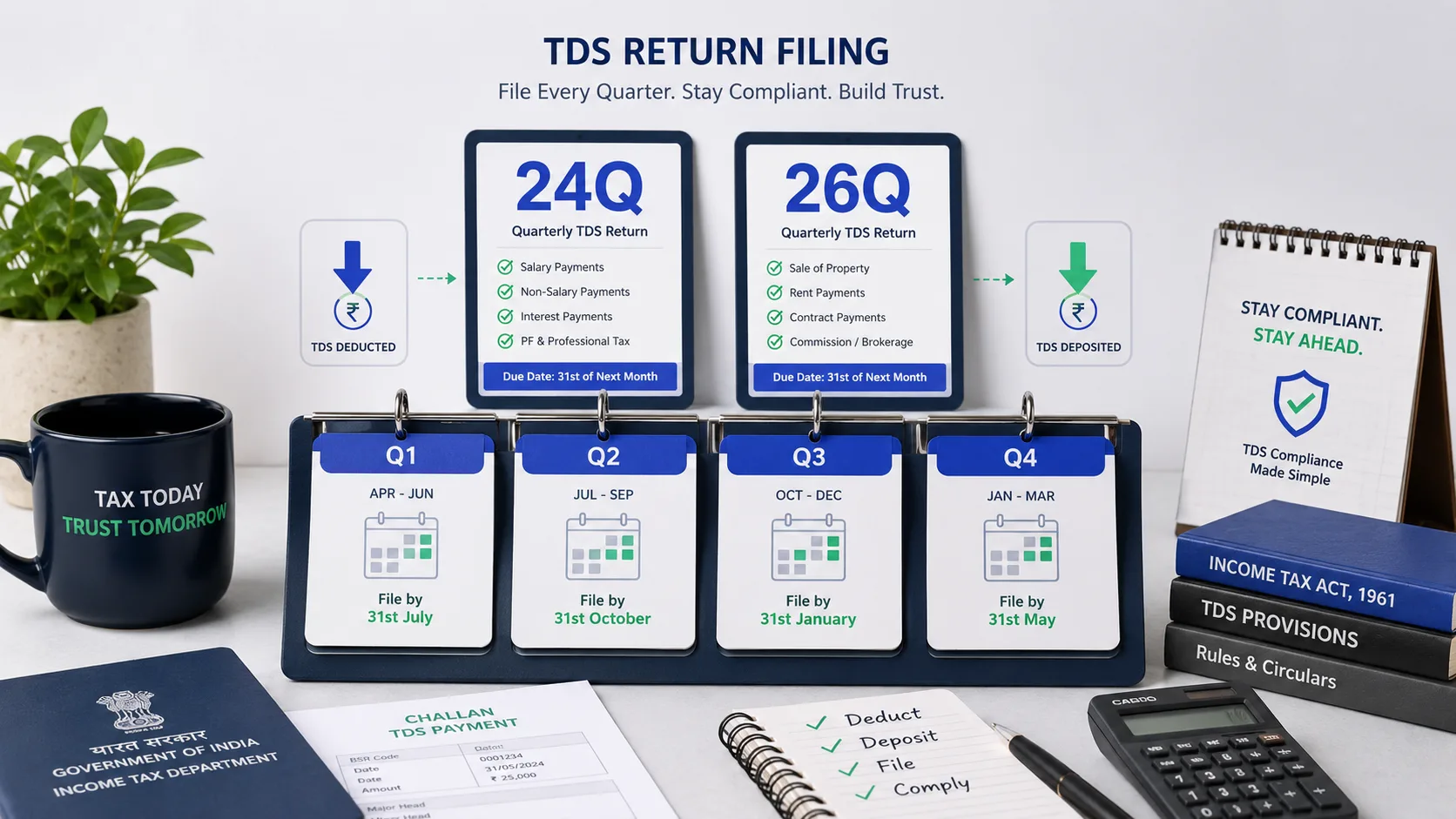
TDS return filing: due dates, forms and how to file
TDS returns are quarterly: due 31 July, 31 October, 31 January and 31 May. From 2026-27, 24Q is Form 138 and 26Q is Form 140. Steps, late fee and interest.
 Income Tax
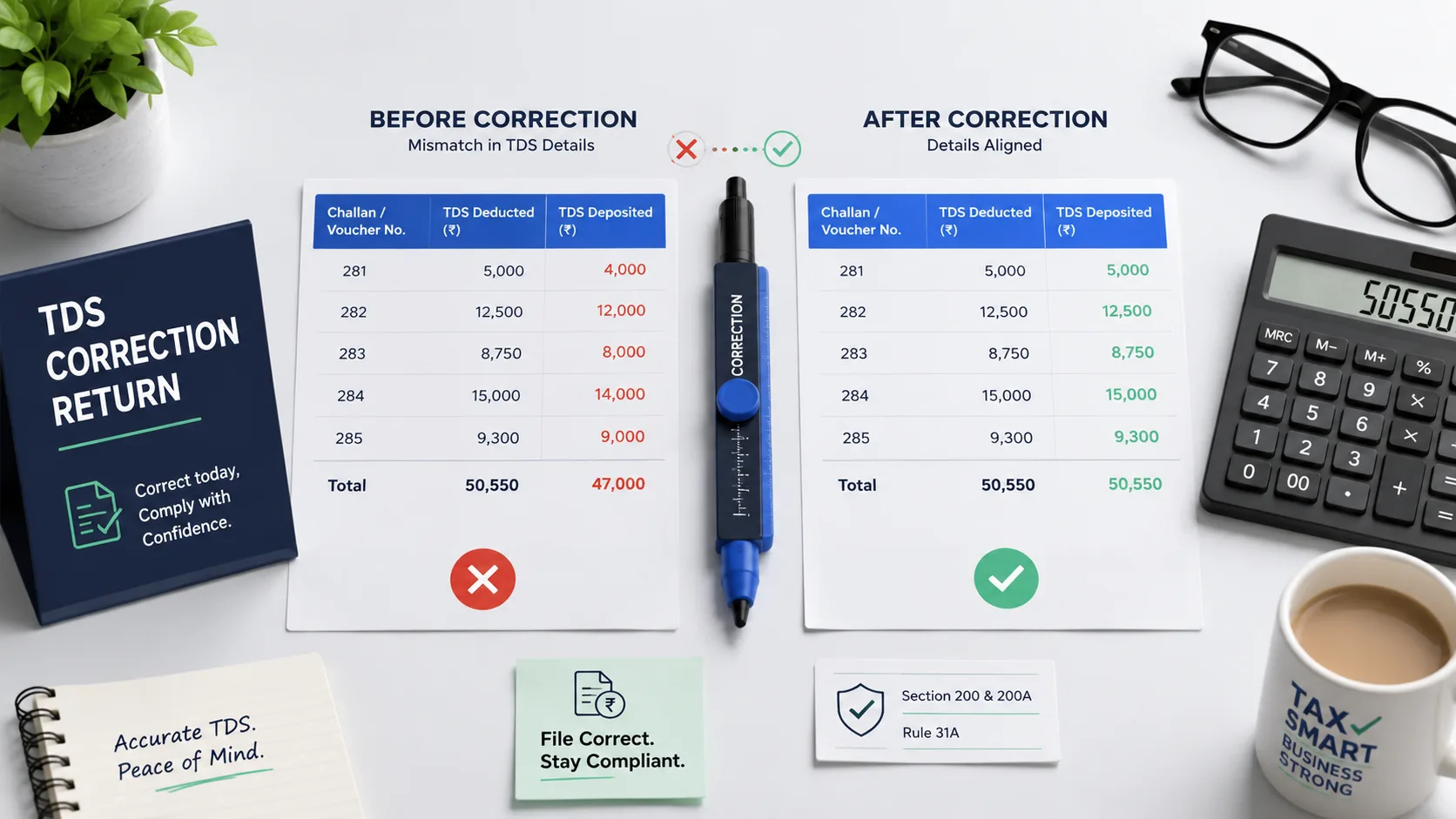
How to file a TDS correction return (revised TDS return)
File a TDS correction within two years from the end of the tax year the return was due. Steps with the conso file, correction types, PAN and challan fixes.
 Income Tax
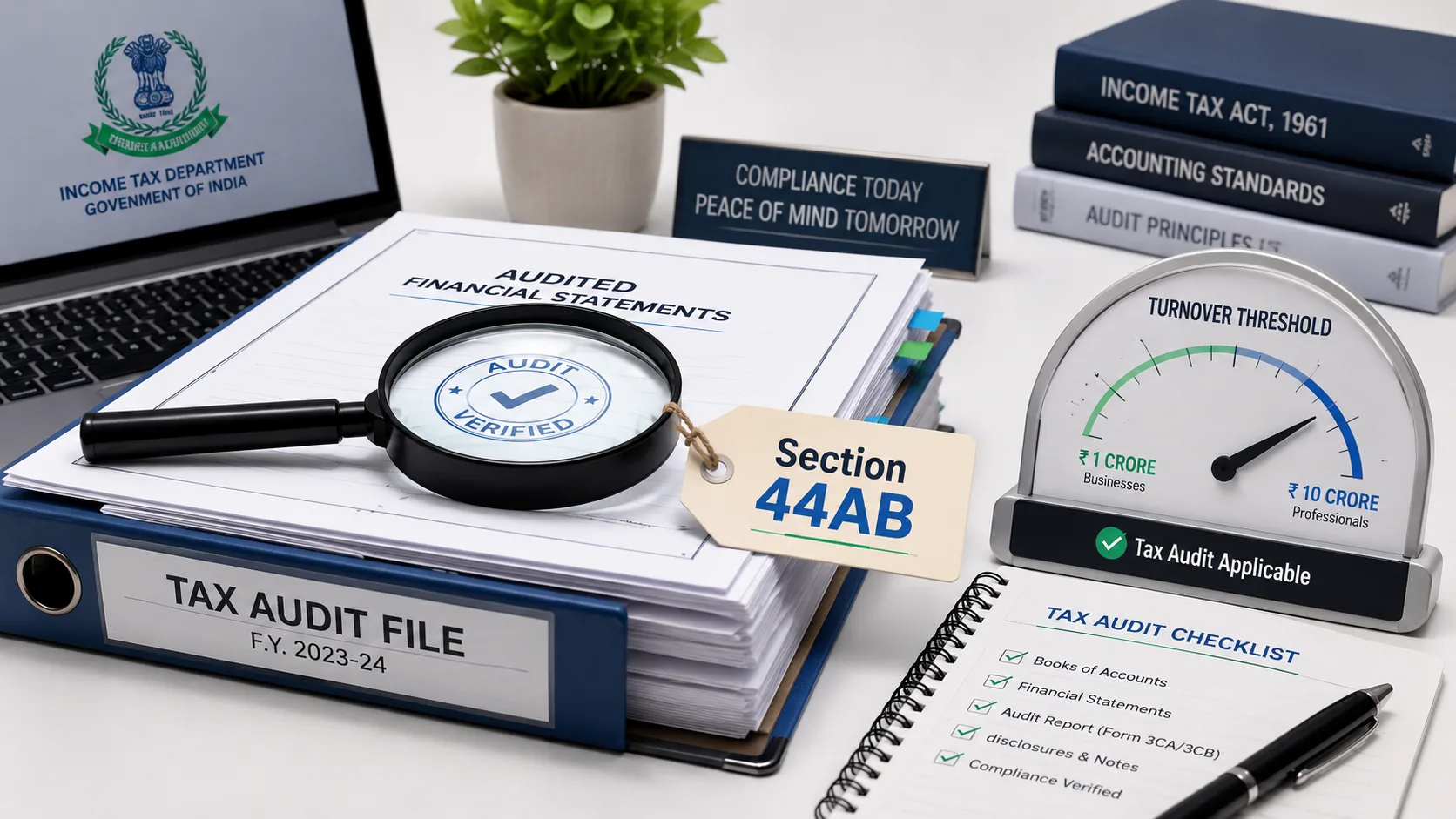
Tax audit under section 44AB: who needs it, limit and due date
Tax audit is needed above ₹1 crore business turnover (₹10 crore if cash is 5% or less) or ₹50 lakh professional receipts. AY 2026-27 report now due 21 Oct 2026.
 Income Tax
Belated return and late fee: what you pay if you file ITR late
Missed the ITR due date? You pay a late fee of ₹1,000 or ₹5,000 under 234F, plus 1% a month interest under 234A. File a belated return by 31 Dec 2026.
 Income Tax
Updated return (ITR-U): can you still file ITR for past years?
Missed income or a whole return? File an updated return (ITR-U) up to 48 months after the assessment year. You pay 25% to 70% extra tax. Check your year.
 Income Tax
Income tax refund: status, delay, TDS refund and 244A interest
Check your ITR refund status, see why it is delayed, fix a restricted or failed refund, claim TDS refund and know your 244A interest for AY 2026-27.
 Income Tax
How to file a revised ITR: last date and fee for AY 2026-27
Made a mistake in your ITR? File a revised return under section 139(5). For AY 2026-27 the last date is 31 March 2027, with a fee after 31 December 2026.
 Income Tax
How F&O and intraday trading income is taxed in India
F&O profit is business income and intraday profit is speculative business income, both taxed at your slab rate in ITR-3. Losses, audit and STT explained.
 Income Tax
Capital gains tax on shares: STCG and LTCG explained
Sell listed shares within 12 months and pay 20% (section 111A). Hold longer and pay 12.5% on gains above ₹1.25 lakh (section 112A). Examples inside.
 Income Tax
Capital gains tax on sale of property, land and house in India
Sold property held over 24 months? Pay 12.5% on the gain. Residents who bought before 23 July 2024 can pay 20% with indexation if lower. Examples inside.
 Income Tax
Section 54F: capital gains exemption when you buy a house
Sold land, shares or other assets held long term? Section 54F can exempt the gain if you put the sale money into one house in India. Rules, limit, examples.
 Income Tax
How mutual funds are taxed in India: gains, SIP and dividends
Equity fund gains: 20% within 12 months, 12.5% above ₹1.25 lakh after. Debt funds bought since April 2023: slab rate. SIP, SWP and dividend tax too.
 Income Tax
How debt mutual funds and liquid funds are taxed in India
Debt fund units bought from 1 April 2023: gain taxed at your slab rate, however long you held them. Older units: 12.5% after 24 months, no indexation.
 Income Tax
How gold ETFs, silver ETFs and gold funds are taxed in India
Gold and silver ETFs held more than 12 months: 12.5% tax on the gain, no indexation. Sold sooner: slab rate. Gold funds need 24 months.
 Income Tax
Cost inflation index (CII) for FY 2026-27: 384, with the full table from 2001-02
The cost inflation index for FY 2026-27 is 384, notified by CBDT on 15 July 2026. See the full CII table from 2001-02, the indexed cost formula and who can still use indexation.
 Income Tax
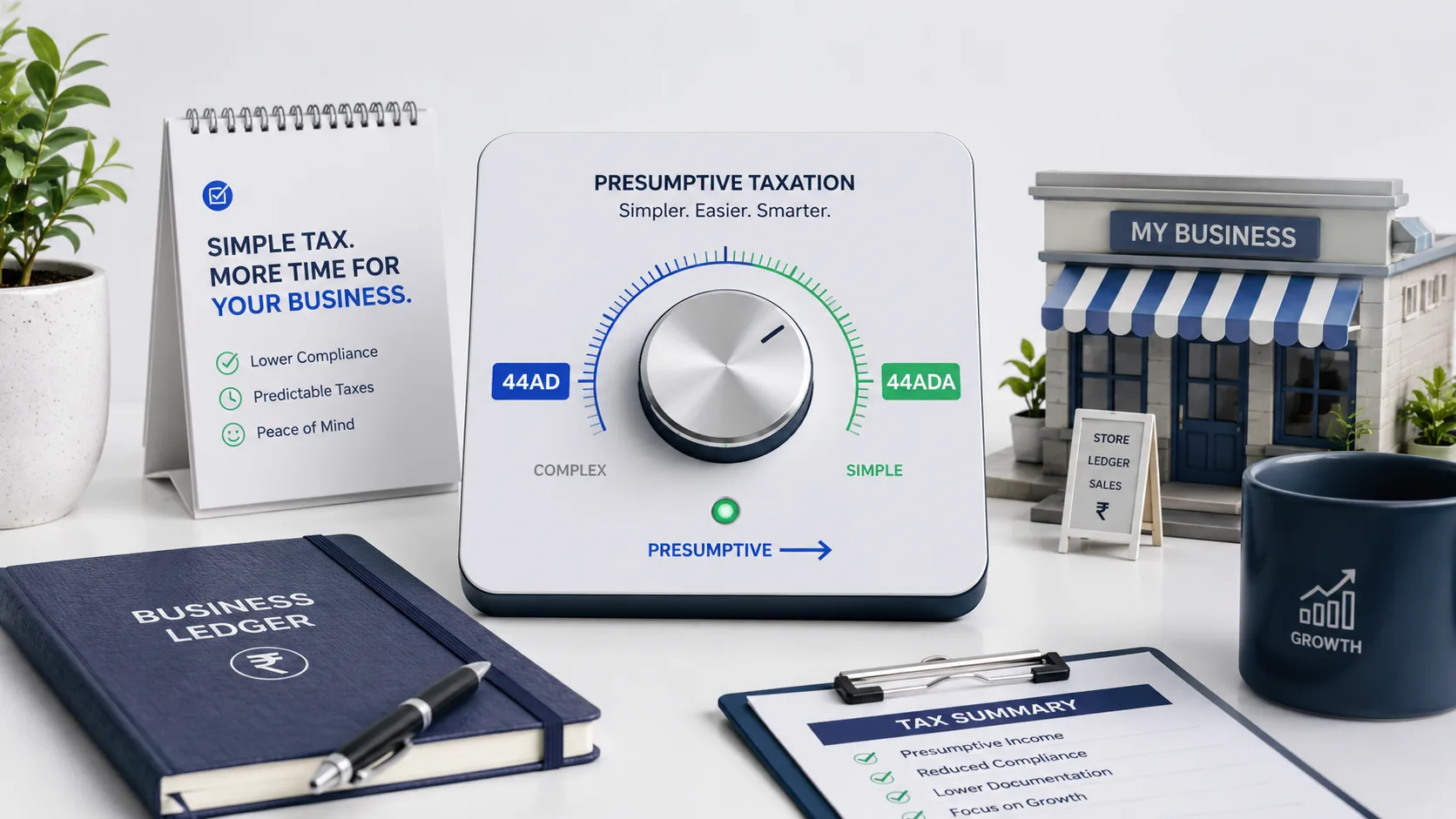
Presumptive tax under section 44AD, 44ADA and 44AE explained
Under 44AD a small business shows 8% of turnover (6% if paid digitally) as income, up to ₹2 crore or ₹3 crore. Professionals under 44ADA show 50%.
 Income Tax
MSME 45 days payment rule and section 43B(h): a simple guide
Buyers must pay micro and small suppliers within 45 days. If not, the buyer owes interest and gets the tax deduction only when it pays. Rules and examples.
 Income Tax
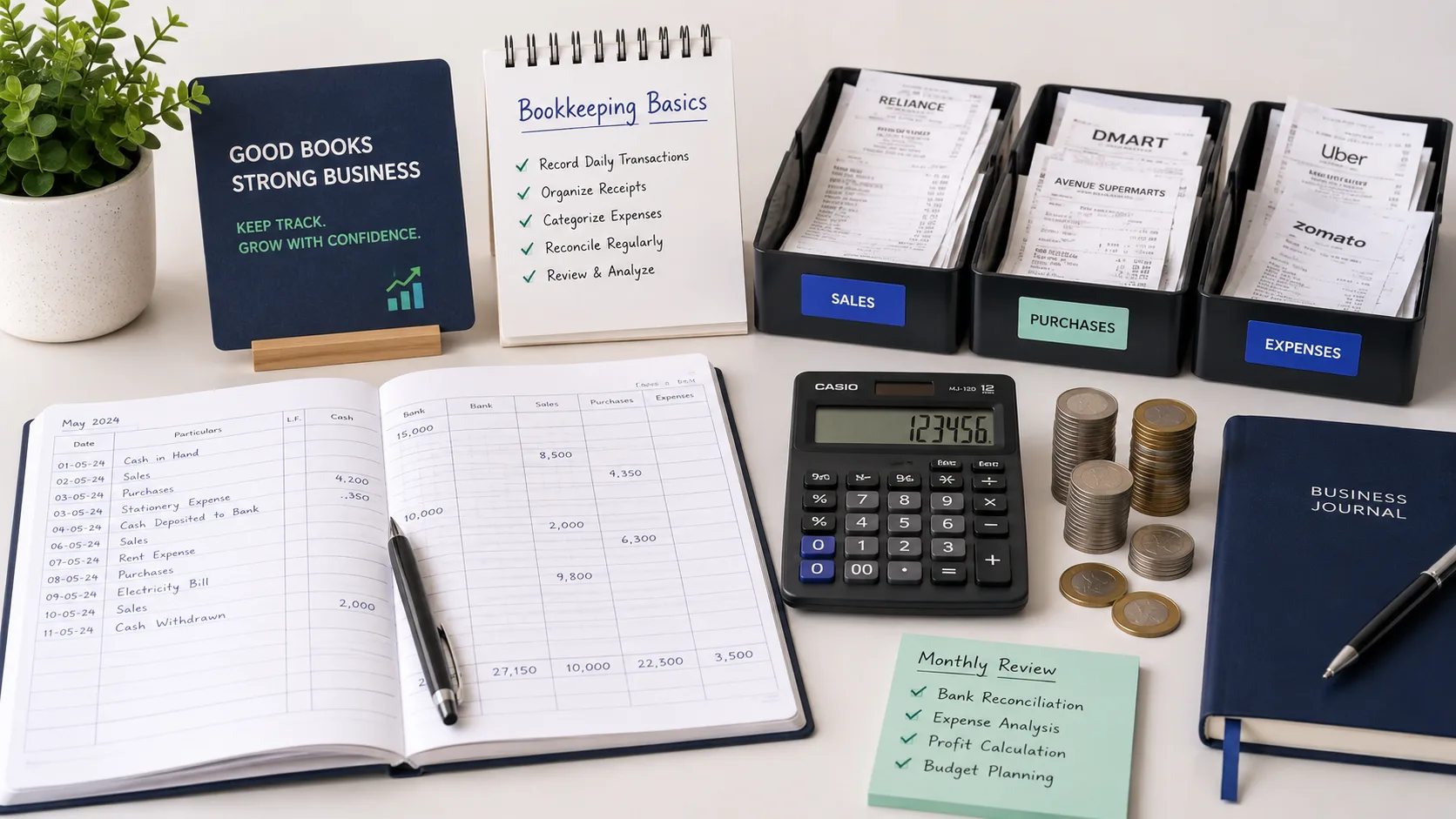
Bookkeeping basics every small business in India should know
The records you must keep, the reports that matter, and the monthly routine that makes tax season painless.
 Income Tax
Tally, Zoho or a CA? Choosing how to keep your books
DIY software, an in-house bookkeeper or an outsourced CA, the trade-offs for a growing Indian business.
 Company
How to register a Private Limited Company in India (SPICe+)
The end-to-end incorporation process through SPICe+, from name reservation to your Certificate of Incorporation.
 Company
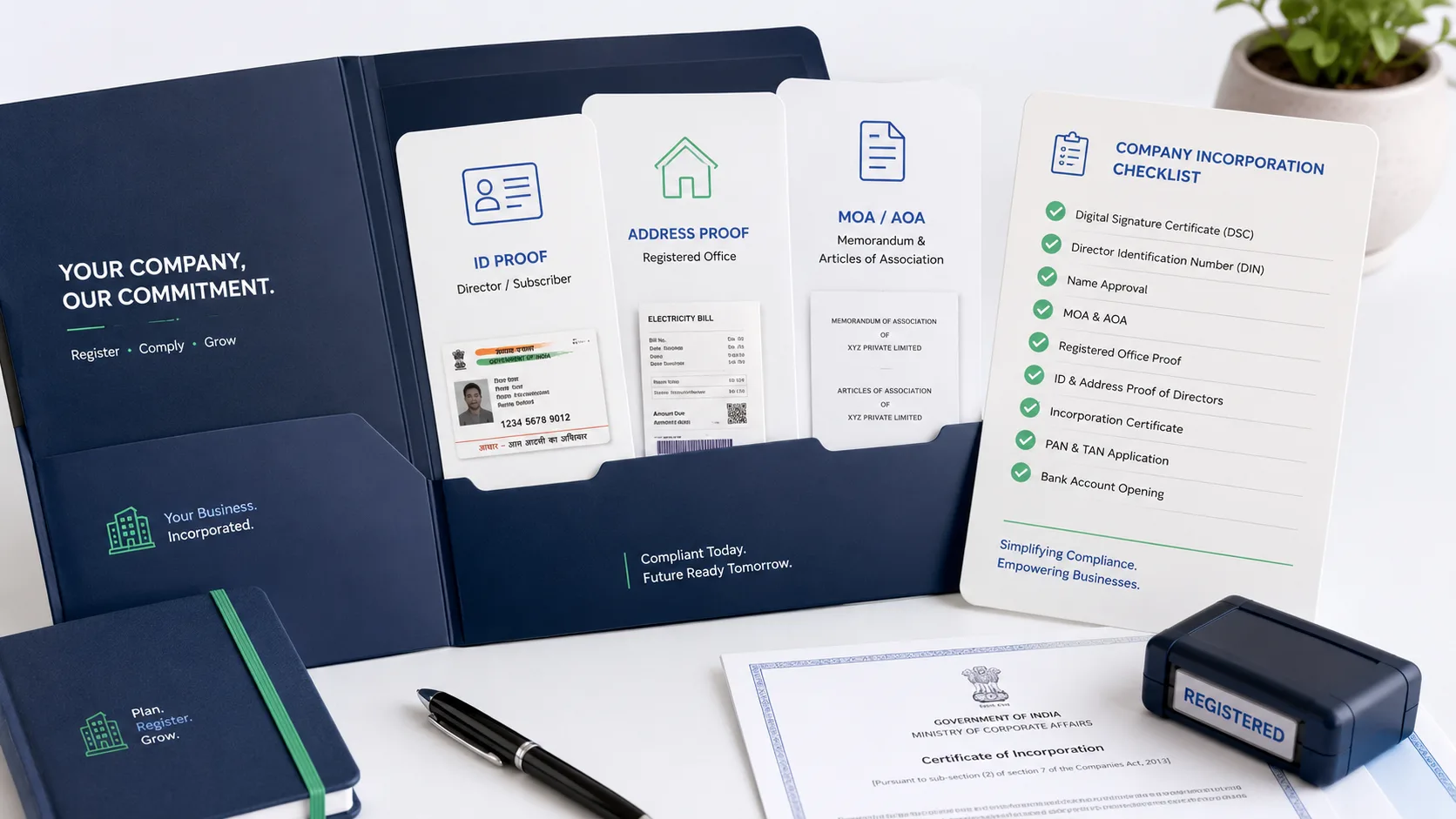
Documents required for company incorporation in India
The exact identity, address and premises documents you need to incorporate, for directors and the company.
 Company
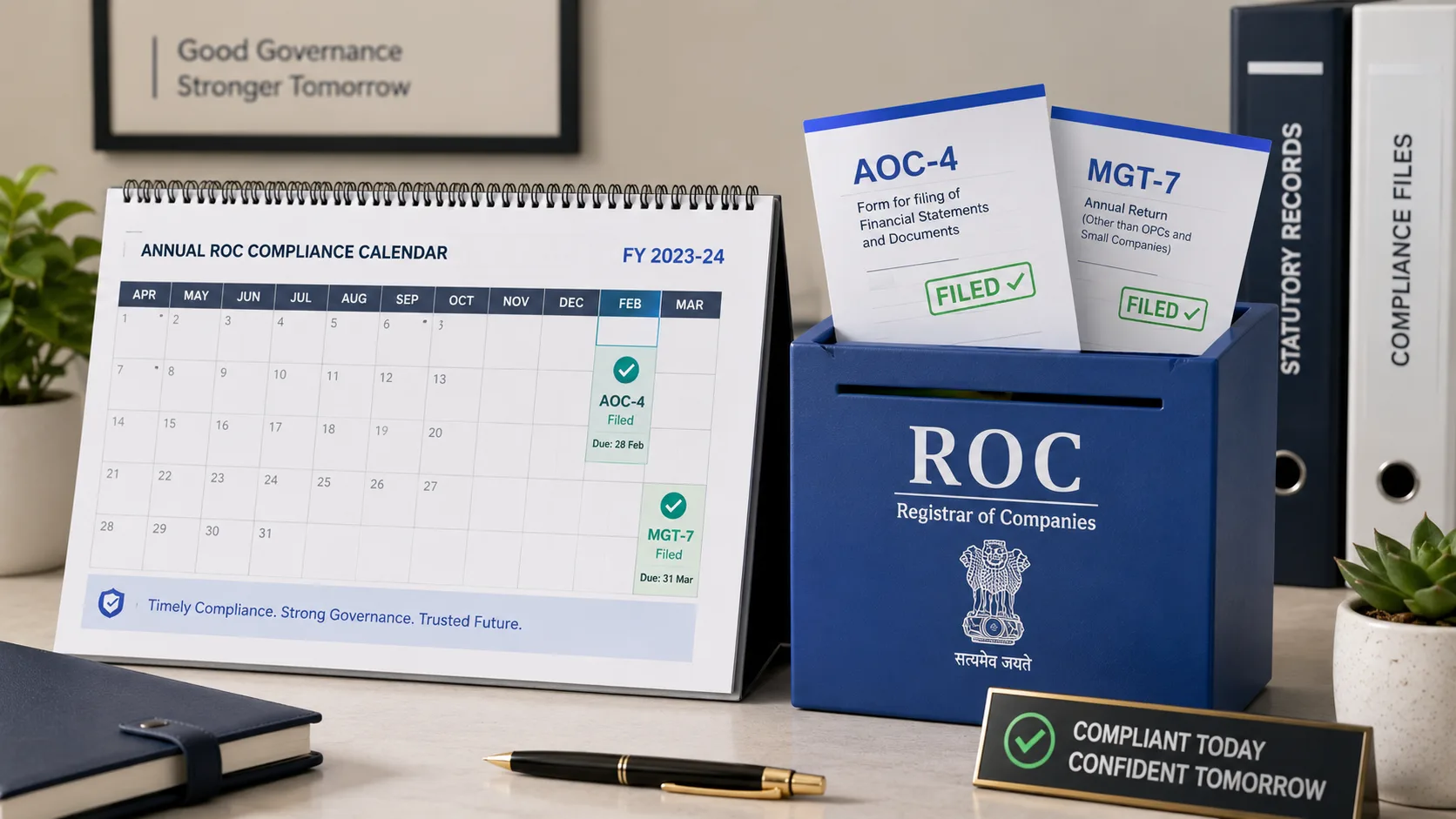
Annual ROC compliance for private limited companies: due dates, forms and late fees
AOC-4 is due within 30 days of the AGM and MGT-7 within 60 days. See FY 2025-26 due dates, the ₹100 a day late fee, penalties and what CCFS-2026 was.
 Company
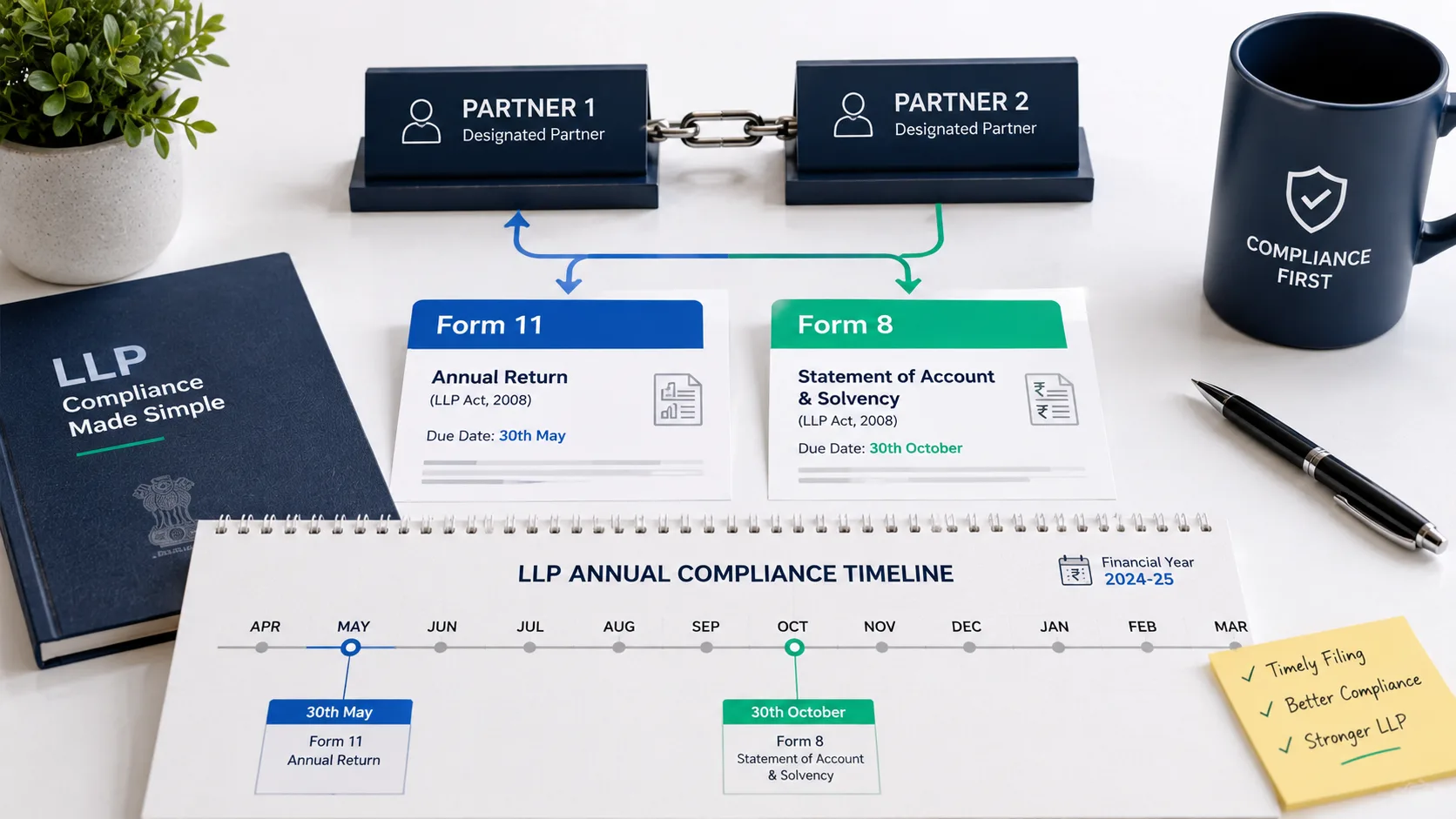
LLP annual compliance: Form 11 and Form 8 explained
LLPs have lighter compliance than companies, but two forms and an ITR are non-negotiable. Here they are.
 Company
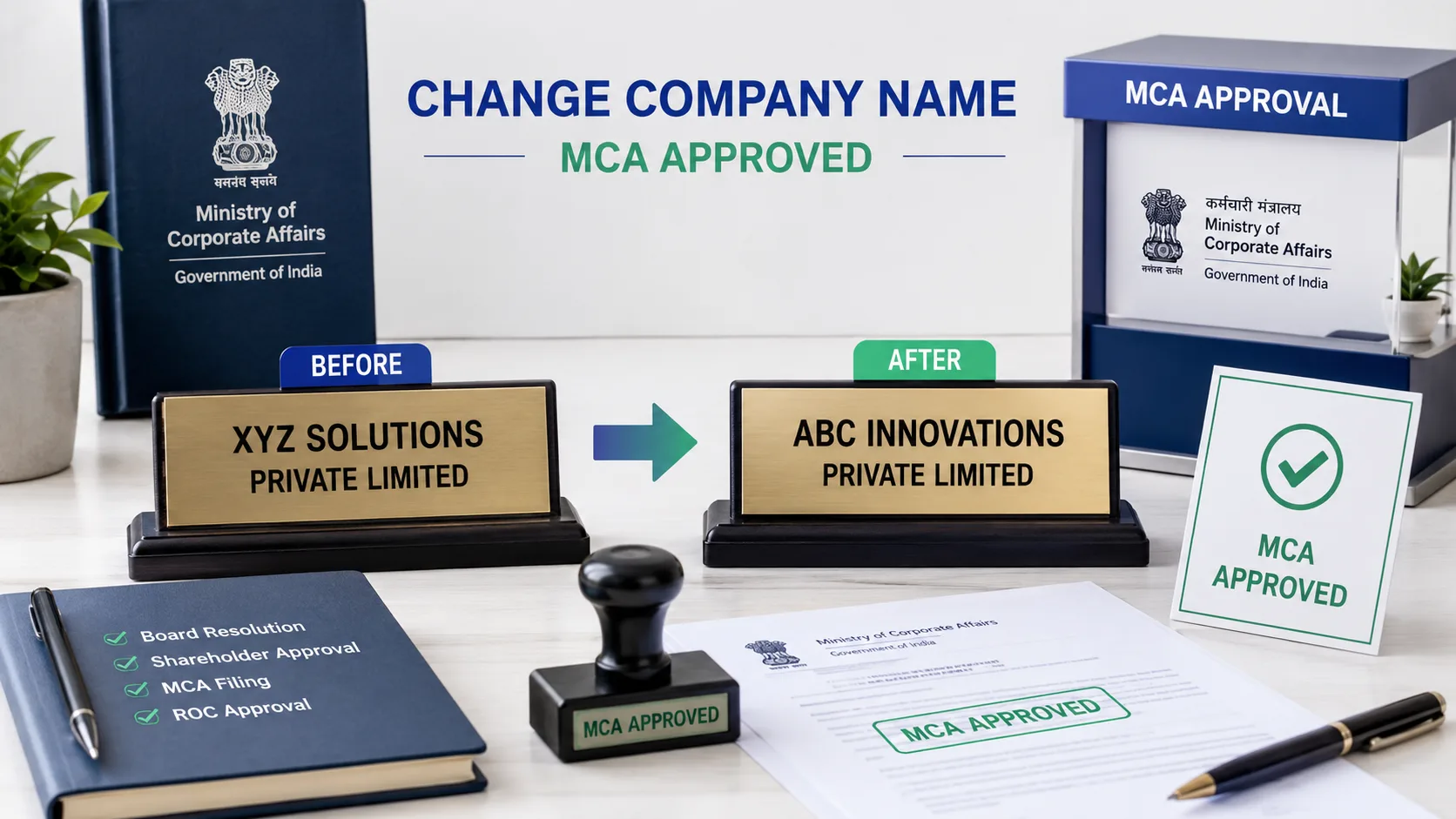
How to change a company name: procedure, INC-24 and approvals
A company name is changed by a special resolution and Central Government approval. The steps, Forms MGT-14 and INC-24, and what to update afterwards.
 Company
How to increase authorised share capital: steps, SH-7 form and fees
How a company increases its authorised share capital: the resolution, Form SH-7 within 30 days, ROC fee, stamp duty, MGT-14 and late filing penalty.
 Company
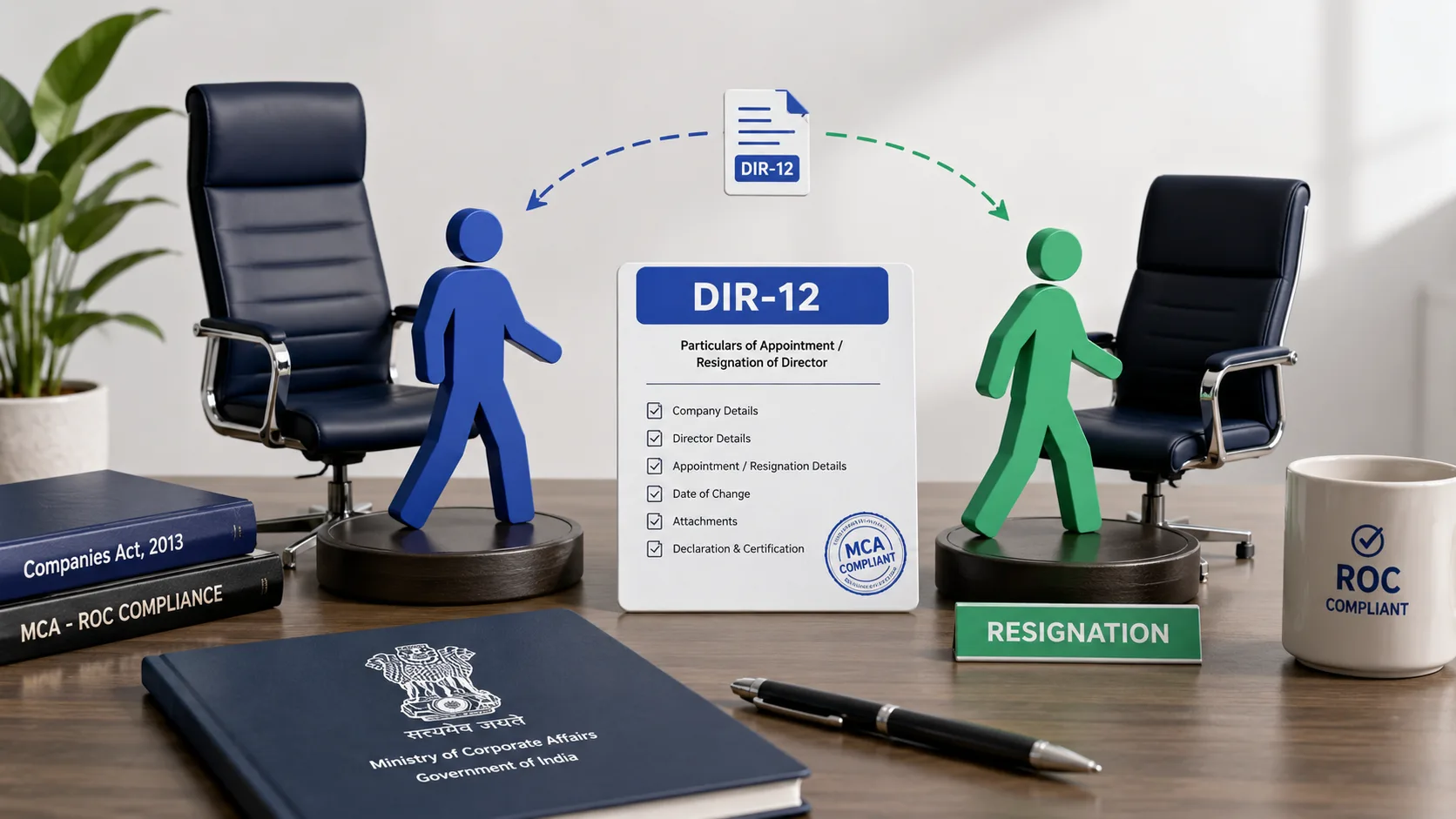
Form DIR-12: purpose, due date, fees and how to file
Form DIR-12 tells the ROC about a director or KMP appointment, resignation, removal or change within 30 days. Attachments, fees, late fee, DIR-11 and steps.
 Company
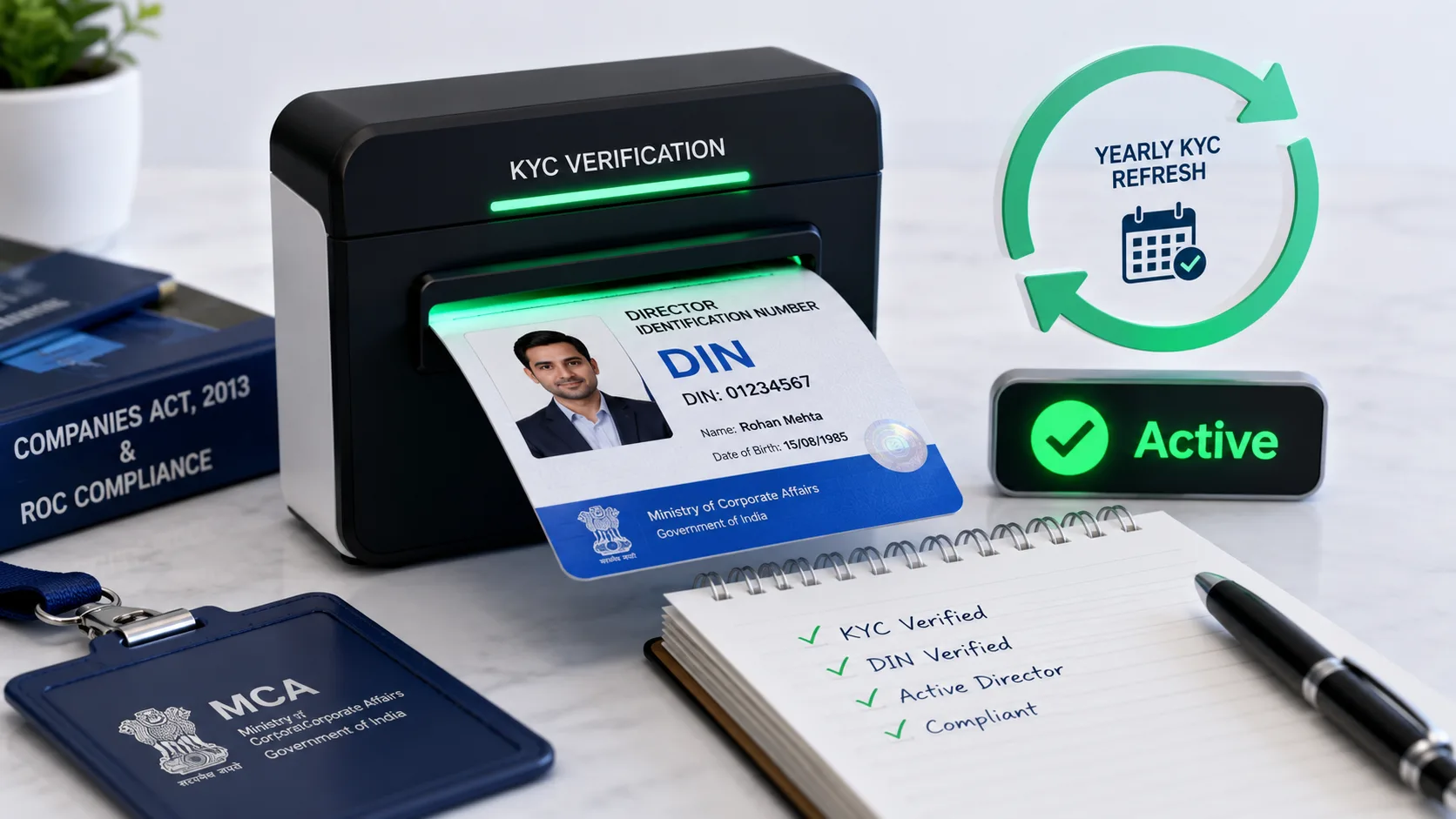
DIR-3 KYC: keep your Director Identification Number active
Every director must file annual KYC or lose their DIN. The deadline, the process and the reactivation fee.
 Company
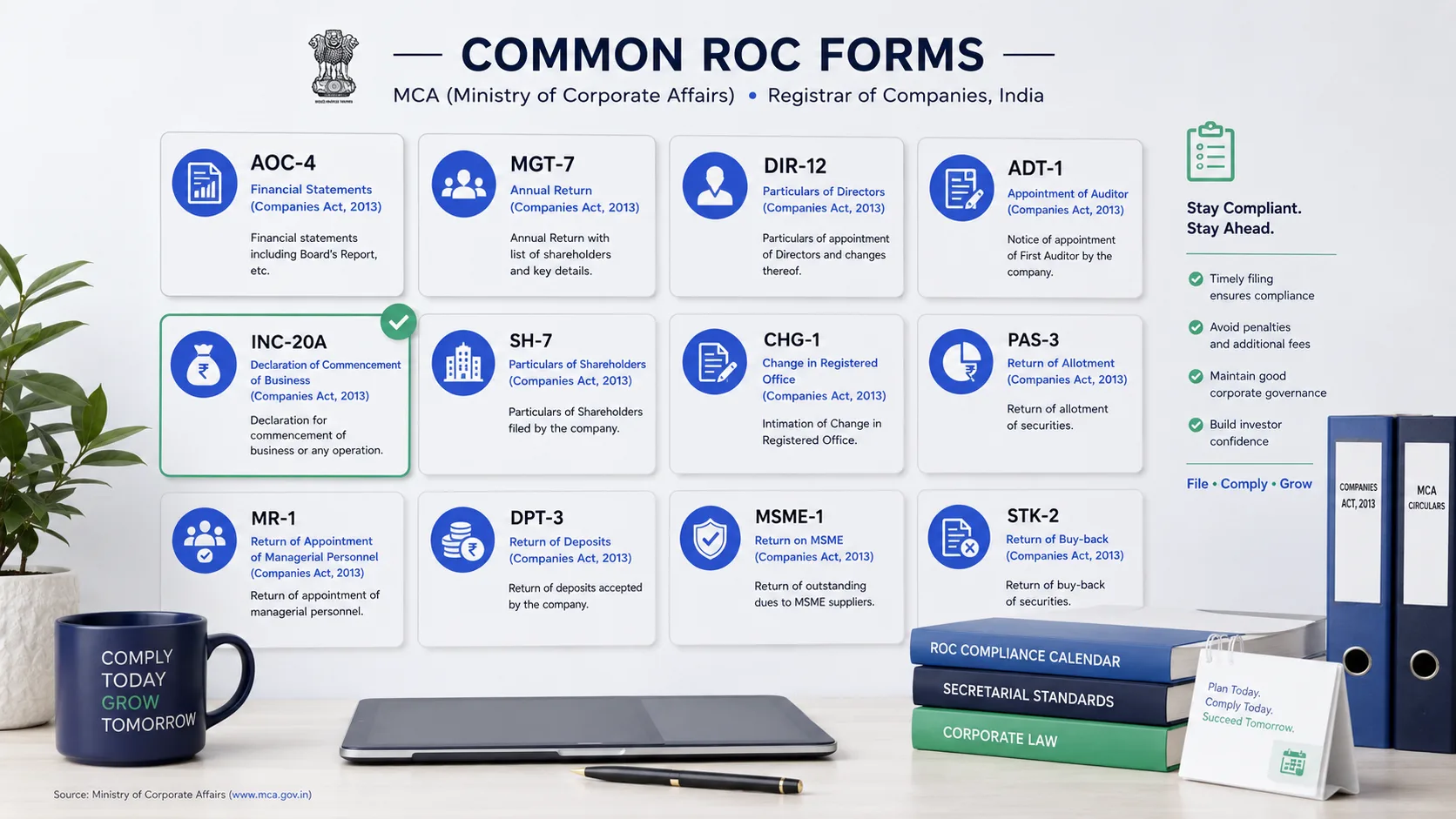
List of ROC forms companies file, with time limits
AOC-4, MGT-7, DIR-3 KYC, ADT-1, DIR-12, SH-7, INC-22, MGT-14, PAS-3 and INC-24: what each ROC form is for and the time limit to file it.
 Company
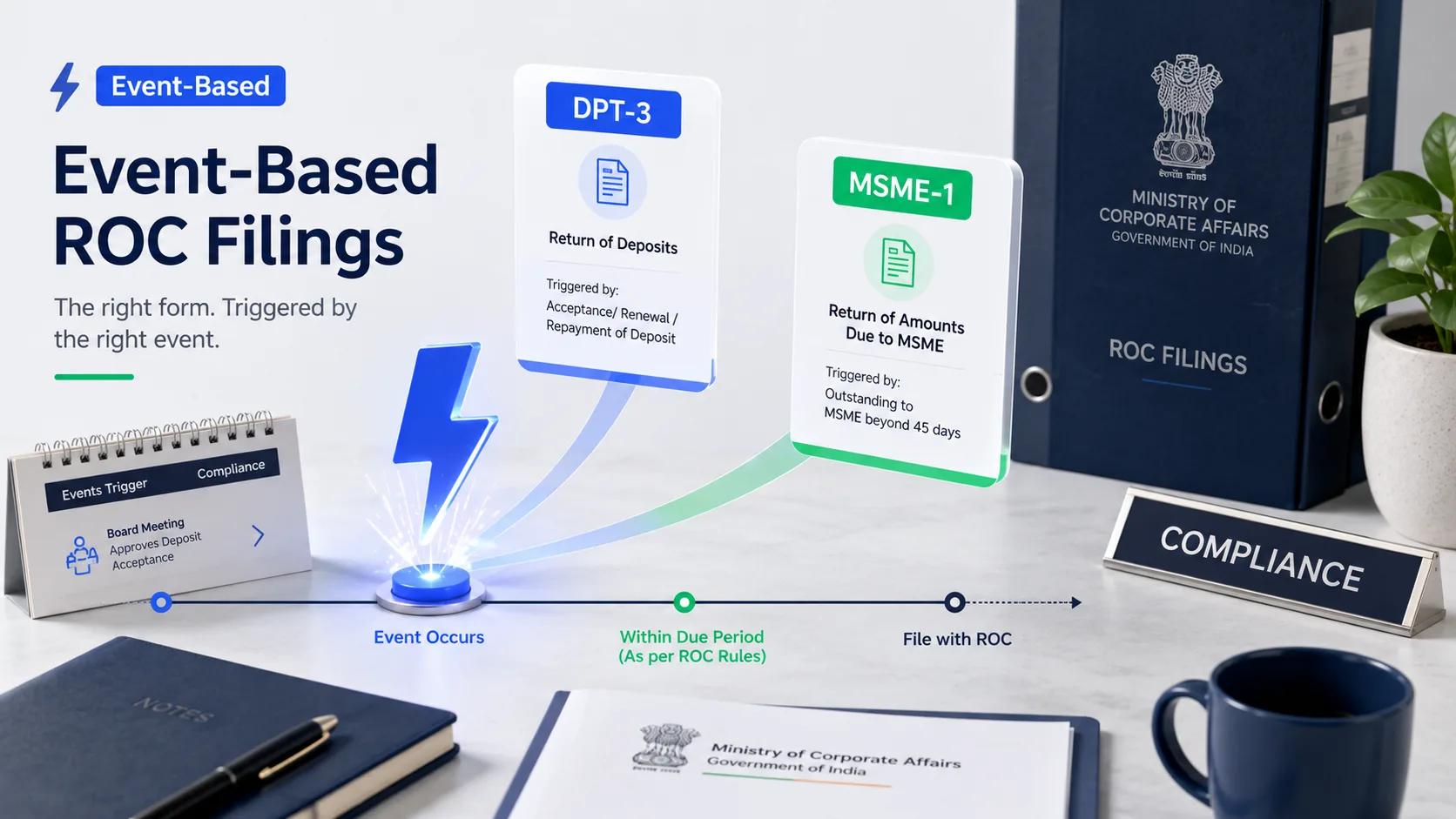
DPT-3, MSME-1 and other event-based ROC filings
Beyond annual returns, companies owe event-based filings that are easy to forget. Here are the important ones.
 Registrations
Udyam (MSME) registration: eligibility, limits, documents and process
Who can get Udyam (MSME) registration, the limits that apply from 1 April 2025, the details you need, and how to register free on the government portal.
 Registrations
Benefits of MSME (Udyam) registration, and who does not get them
Udyam registration benefits: collateral-free bank loans, interest on late payments, tender benefits and a lower trademark fee. With official sources.
 Registrations
Udyam certificate download, verify and update: a simple guide
Download your Udyam certificate free from udyamregistration.gov.in with your Udyam number and mobile OTP. Also: verify a number, find a lost one, update.
 Registrations
IEC code registration: how to start importing or exporting
The Import Export Code is mandatory to trade goods across India's borders. How to get one, once, for good.
 Registrations
Do service exporters need an IEC? When it is required
Software, consulting and design exporters, here is when you actually need an Import Export Code, and when you do not.
 Registrations
How to register a trademark in India: classes, process and cost
Protect your brand name and logo. The trademark classes, the search, the filing, and the road to the R symbol.
 Registrations
Trademark objection and opposition: how to respond
An objection is not a rejection. How to answer an examination report or an opposition and save your mark.
 Registrations
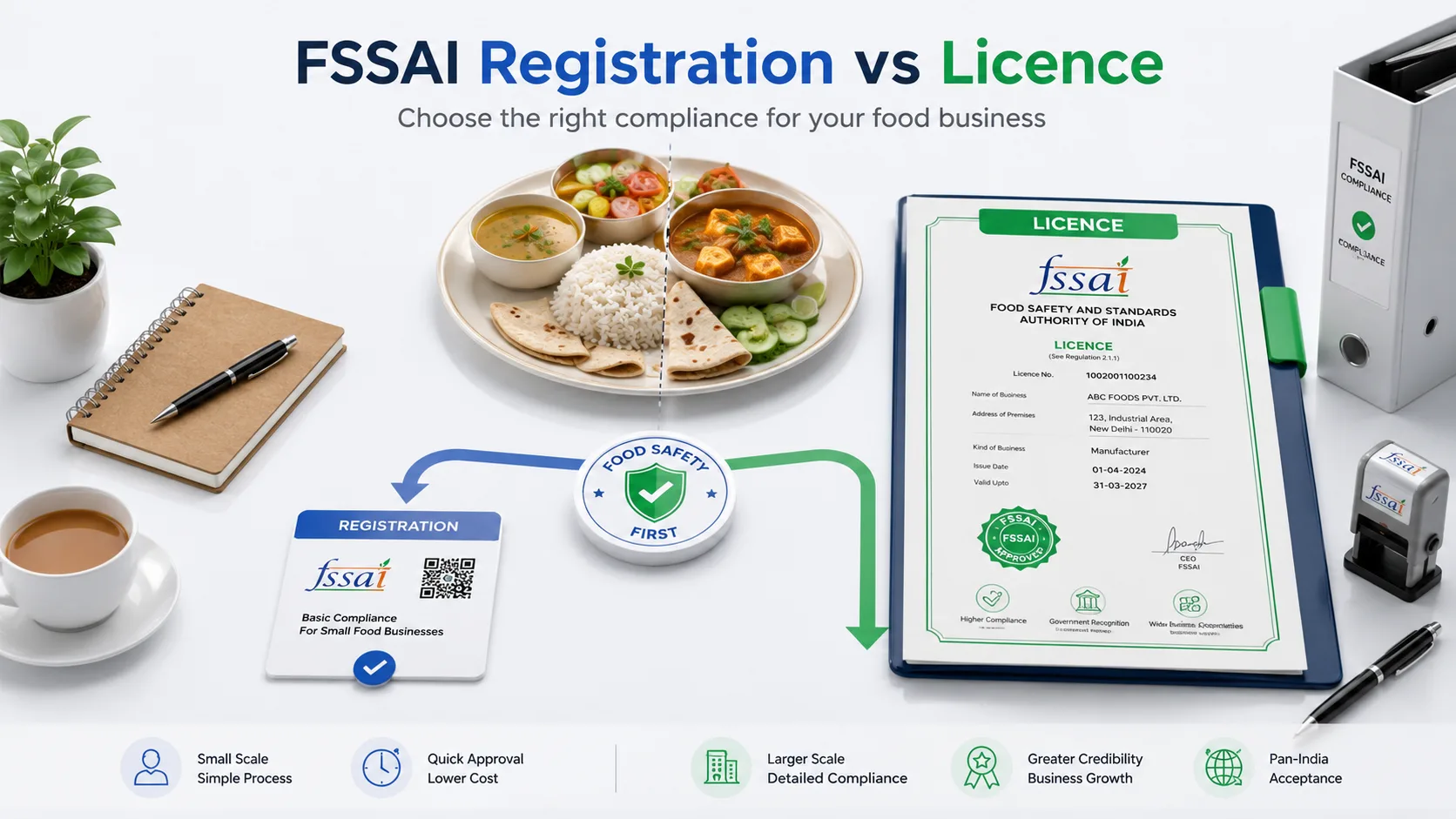
FSSAI registration vs licence: which does your food business need?
Basic registration, state licence or central licence? How turnover and scale decide your FSSAI tier.
 Registrations
FSSAI registration and licence for cloud kitchens and home kitchens
From 1 April 2026, a food business with turnover up to ₹1.5 crore needs FSSAI registration, not a licence. Which tier a cloud kitchen or home kitchen needs.
 Registrations
PAN card for individuals and businesses: how to apply
Everyone earning or transacting in India needs a PAN. How to apply for an individual or a business PAN.
 Registrations
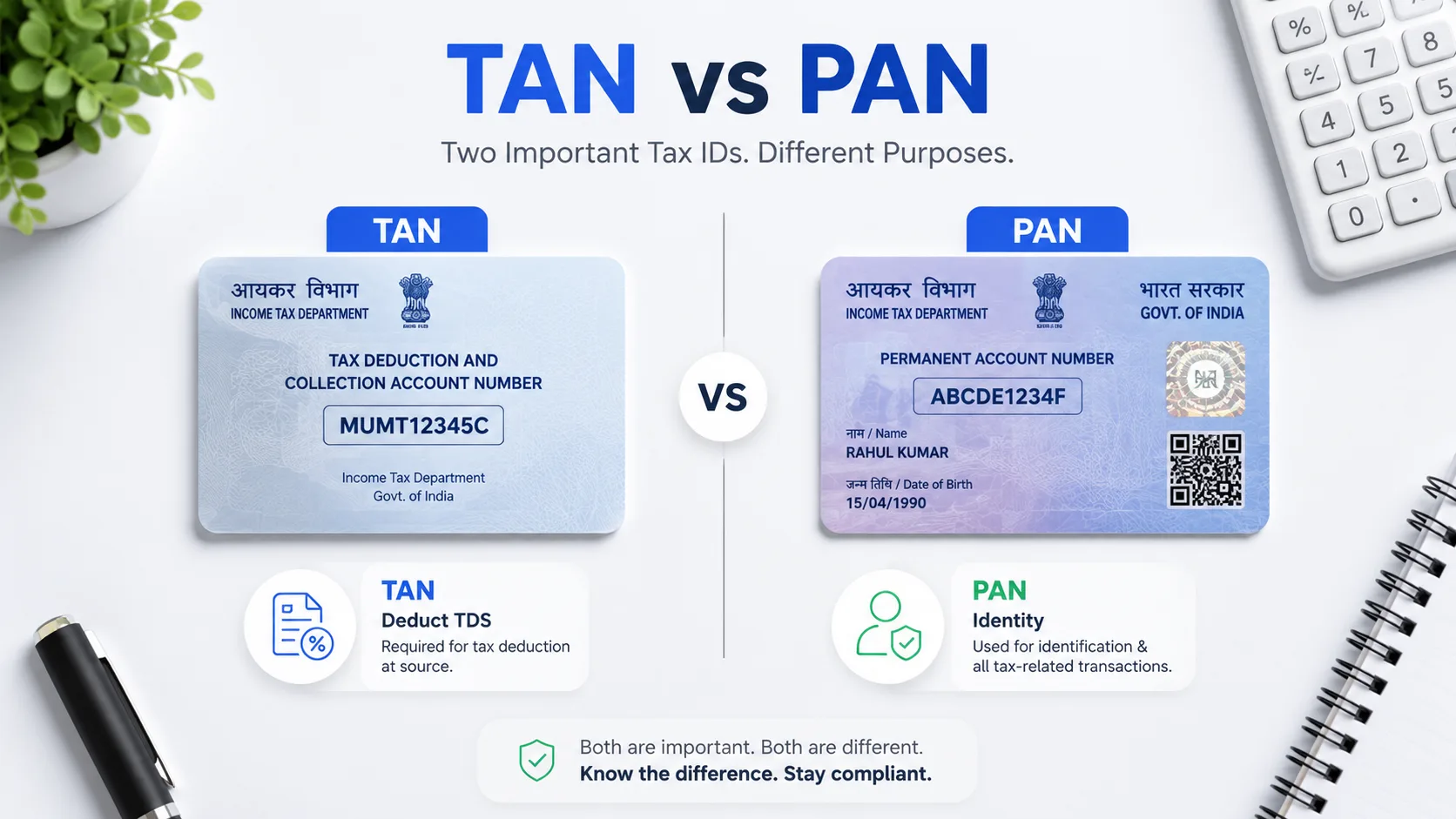
TAN vs PAN: difference, full form and when you need both
PAN identifies a taxpayer. TAN identifies a person who deducts or collects tax at source. Full forms, formats, the 2026 TAN forms and who needs both.
 Income Tax
Income tax for senior citizens: slabs, 80TTB and pension
Income tax slabs for senior citizens (60+) and super seniors (80+) for FY 2026-27, the ₹12 lakh rebate, 80TTB, 80D, pension tax and TDS on FD interest.
 Income Tax
Rebate under section 87A: limit, eligibility and marginal relief
87A rebate: up to ₹60,000 if total income is ₹12 lakh or less (new regime), or ₹12,500 up to ₹5 lakh (old). Who can claim, marginal relief, capital gains.
 GST
How to check GST return filing status and GST payment status
Check GST return filing status by GSTIN without login (Search Taxpayer) or after login (Track Return Status). Track GST payment status with GSTIN and CPIN.
 GST
How to pay GST online: create a GST challan and pay it
Pay GST online on gst.gov.in: create a GST challan (PMT-06), pay by net banking, card, UPI or NEFT/RTGS, with or without login. Due dates and interest.
 GST
GST return due dates: GSTR-1 and GSTR-3B due date and late fee
GSTR-1 is due on the 11th (13th if quarterly) and GSTR-3B on the 20th (22nd or 24th if quarterly). Late fee, caps, 2026 extensions and next due dates.
 GST
How to file a nil GST return: GSTR-1 and GSTR-3B, online and by SMS
No sales and no tax this month? File a nil GSTR-1 and GSTR-3B on the GST portal or by SMS to 14409. Conditions, steps, QRMP, CMP-08 and the ₹20 a day late fee.
 GST
Electronic credit ledger, cash ledger and liability register in GST
What the GST electronic credit ledger, cash ledger and liability register show, what each can pay, how to check your ITC balance, blocked credit and refunds.
 GST
DRC-03 in GST: what it is, how to file it, and how to link it with DRC-03A
Form DRC-03 is how you pay GST you owe on your own or against a notice. Steps on the GST portal, which section to pick, penalty rules and DRC-03A linking.
 GST
DRC forms in GST: what DRC-01, 01A, 01B, 01C, 06, 07, 13 and 22 mean, and what to do
DRC forms are GST demand and recovery forms. What DRC-01, 01A, 01B, 01C, 06, 07, 13 and 22 mean, your time limits, and how to reply or pay on the portal.
 GST
GST composition scheme: turnover limit, tax rates, who can opt, rules and returns
GST composition scheme in simple words: ₹1.5 crore limit (₹75 lakh in 8 States), 1%, 5% and 6% rates, who cannot opt, CMP-02, CMP-08, GSTR-4 and opting out.
 GST
GSTR-4 annual return: meaning, due date, late fee, format and how to file
GSTR-4 is the yearly GST return for composition dealers. Due 30 June after the year. Late fee ₹50 a day, up to ₹2,000. Nil return, steps and old years.
 GST
CMP-08 in GST: meaning, due date, late fee, how to file and the RET00009 error
CMP-08 is the quarterly GST tax statement for composition dealers. Due by the 18th after each quarter. No late fee, but 18% interest. Steps, nil and errors.
Deadlines, in your inbox.
Monthly compliance reminders and plain-English tax tips for Indian businesses.
No spam, unsubscribe anytime.