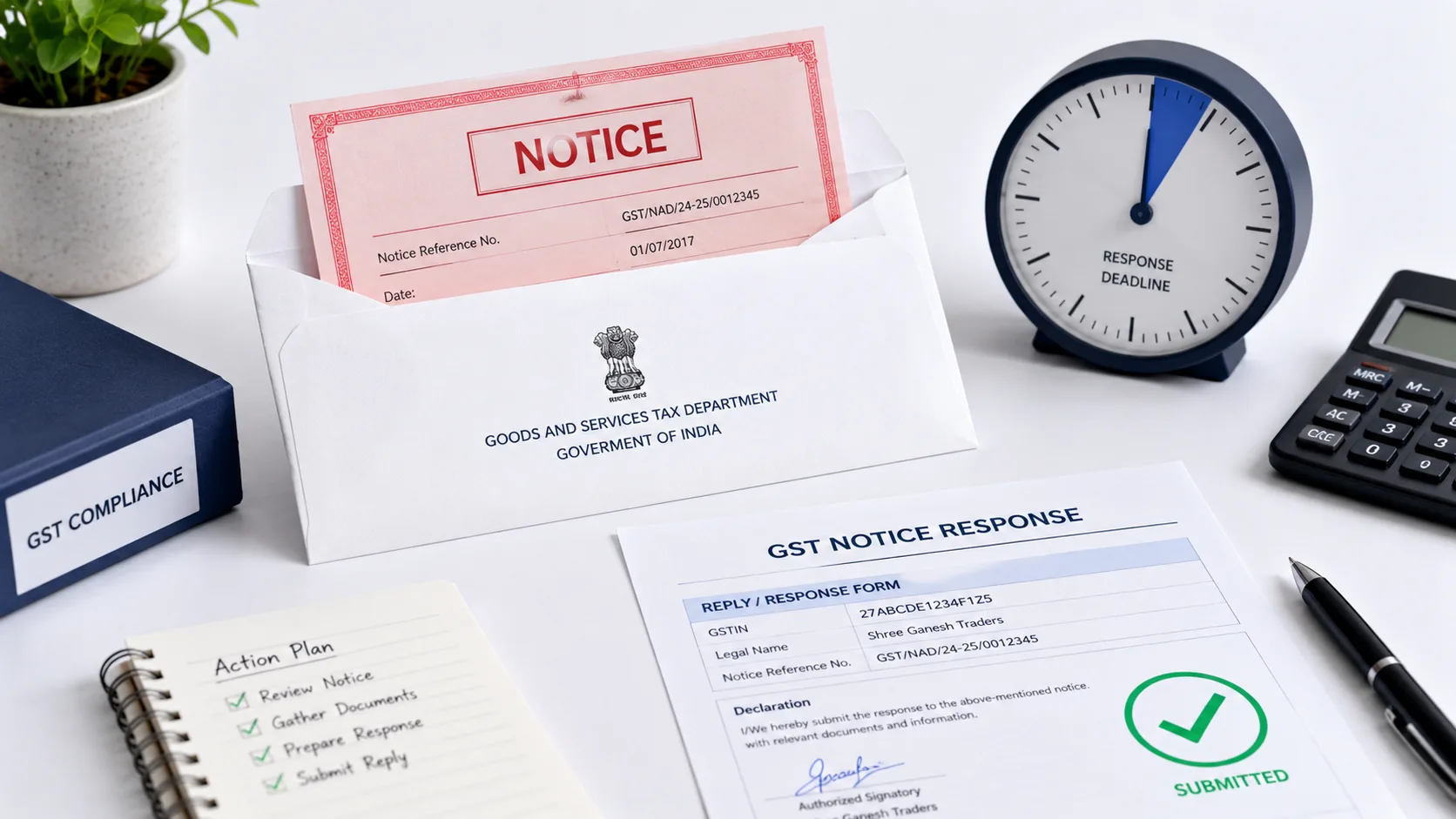
A GST notice can be unnerving, but most are routine — and every one comes with a deadline. Knowing what type you have received, what it is asking for, and how to reply within the window is the difference between closing it quietly and letting it harden into a confirmed demand. This guide walks through the common notices, the forms involved, and how to respond.
- Every notice has a response deadline — often 7, 15 or 30 days. Read it first.
- GSTR-3A is a non-filing reminder; filing the return usually closes it.
- ASMT-10 (scrutiny) and DRC-01 (show-cause / demand) need evidence-backed replies.
- Ignoring a notice can turn a small query into a recoverable demand with interest and penalty.
Common GST notices and what they mean
| Notice | What it means | Reply form |
|---|---|---|
| GSTR-3A | You have not filed a return | File the pending return |
| ASMT-10 | Discrepancy found on scrutiny | ASMT-11 |
| DRC-01 | Show-cause / demand of tax | DRC-06 |
| REG-03 | Clarification on registration | REG-04 |
| RFD-08 | Show-cause on a refund claim | RFD-09 |
The notices in detail
- GSTR-3A: a reminder that you have not filed a return. File it, and the notice usually closes.
- Scrutiny notice (ASMT-10): the officer has spotted a discrepancy in your returns and wants an explanation, replied to in ASMT-11.
- Show-cause notice (DRC-01): a demand for tax, interest or penalty. You reply in Form DRC-06. If you accept the demand, you pay through Form DRC-03. Paid within 30 days of the notice for FY 2023-24 and earlier (60 days for FY 2024-25 onwards), there is no penalty where there was no fraud.
- Notice for mismatch: usually GSTR-1 vs 3B, or ITC claimed vs GSTR-2B.
How to respond, step by step
- Identify the notice type and note the exact response deadline.
- Gather the returns, invoices and reconciliations the notice refers to.
- Draft a clear, point-by-point reply addressing each issue raised.
- Attach documentary evidence for every claim you make.
- File the reply on the portal in the correct form, within the deadline.
“A notice is a conversation on a clock. Answer it fully, with proof, before the deadline — and most simply close.”
Frequently asked questions
What happens if I ignore a GST notice?
The officer can pass an order based on the information available, usually confirming the demand with interest and penalty. Ignoring a notice almost always makes the outcome worse.
Can I get an extension to reply?
In some cases you can request additional time or a personal hearing, but this must be sought within the original window. Do not assume an extension.
Is a scrutiny notice the same as a demand?
No. A scrutiny notice (ASMT-10) seeks an explanation. If your reply is unsatisfactory, it can escalate to a show-cause notice and demand (DRC-01).
If the notice involves a demand or you are unsure how to reply, our GST notices and litigation service drafts the response and represents you through assessment and appeal. Browse all GST services.