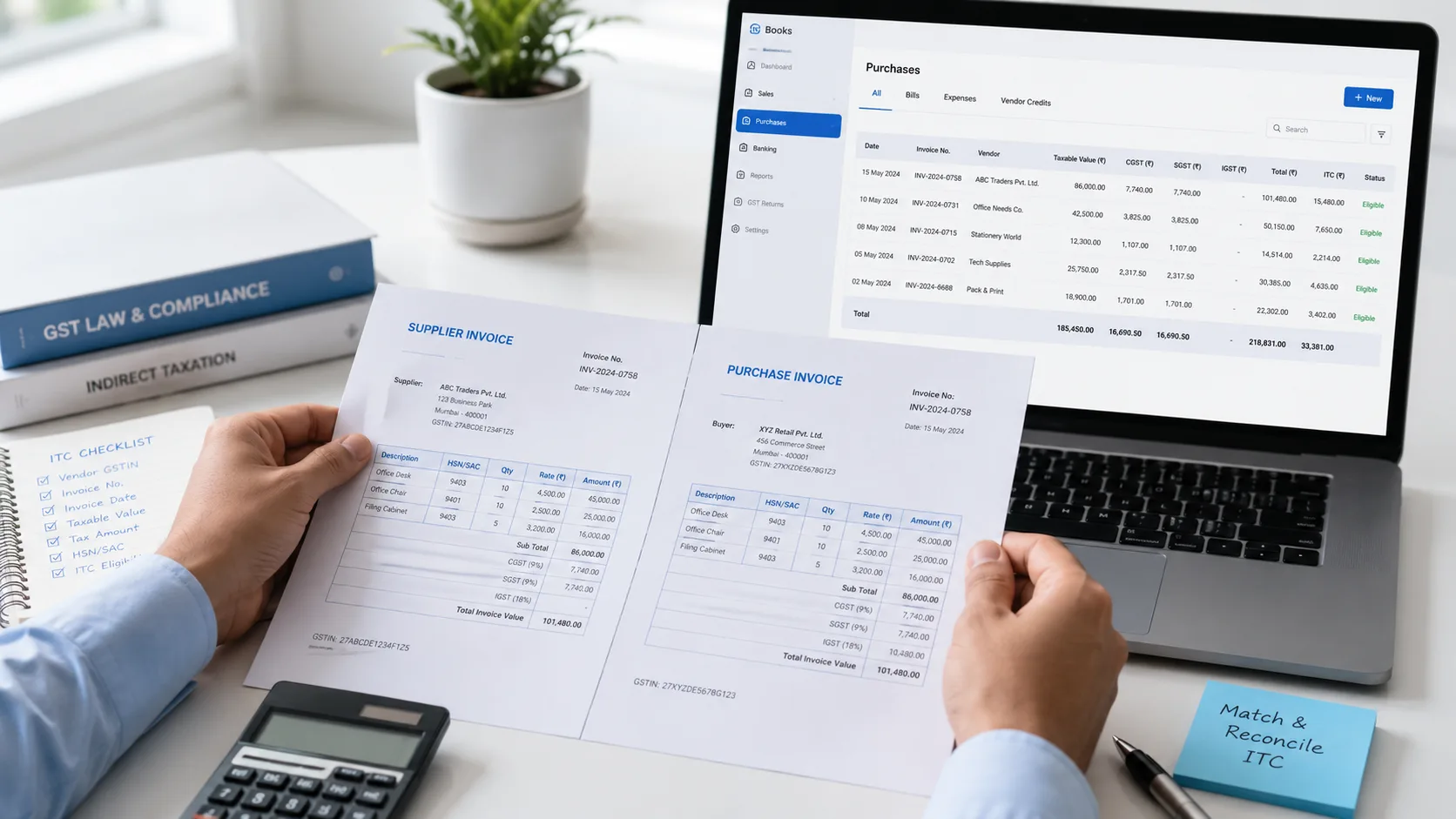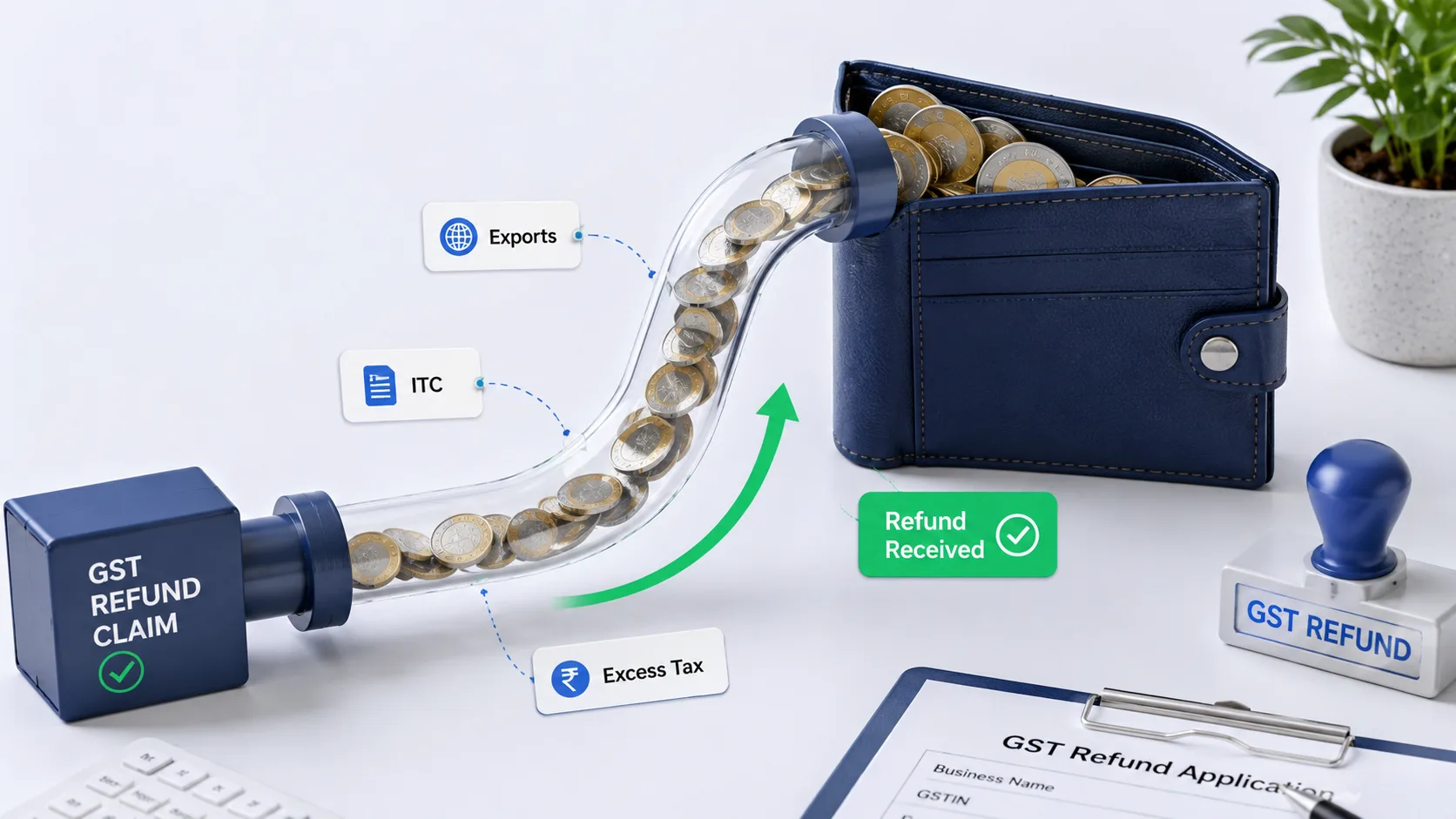
GST refunds are one of the most under-claimed entitlements for Indian businesses. Exporters, manufacturers with an inverted duty structure, and anyone who has overpaid can all claim — if they file Form RFD-01 correctly and follow it through. This guide covers the common refund cases, the two-year time limit, the step-by-step process, and why so many claims fail on paperwork.
- Refunds are claimed on Form RFD-01, within 2 years of the relevant date.
- The three big cases: exports, inverted duty structure, and excess/erroneous tax.
- Exporters should file a Letter of Undertaking (LUT) to export without blocking IGST.
- Most rejections are due to weak documentation, not genuine ineligibility.
The common refund cases
- Exports: zero-rated supplies let you claim a refund of input tax, either with tax paid or under a Letter of Undertaking.
- Inverted duty structure: when your inputs are taxed higher than your outputs, the accumulated credit is refundable.
- Excess tax or cash ledger balance: tax paid in error or a surplus in your electronic cash ledger.
Refund cases and what you need
| Refund case | Key documents | Relevant date for 2-year limit |
|---|---|---|
| Export of goods | Shipping bill, export invoices, BRC/FIRC | Date goods leave India |
| Export of services | Invoices, FIRC/bank realisation | Date of payment / invoice |
| Inverted duty structure | Purchase & sales registers, ITC statement | Due date of return for the period |
| Excess cash ledger balance | Electronic cash ledger | Date of payment |
The process
- Confirm the refund case and reconcile the underlying ITC and invoices.
- File Form RFD-01 on the portal with the required statements and annexures.
- Receive the acknowledgement (RFD-02); respond to any deficiency memo (RFD-03) or show-cause (RFD-08).
- The officer sanctions the refund (RFD-06) and it is credited to your bank account.
Exporters filing under an LUT should have it in place first, covered in our LUT guide.
“A refund is your money sitting with the department. The two-year clock is real — claim it before it expires.”
Frequently asked questions
How long does a GST refund take?
Once a complete claim is filed, the officer must generally process it within 60 days, with interest payable for delays beyond that. Clean documentation is the biggest driver of speed.
What is the time limit to claim a refund?
Generally two years from the relevant date, which varies by refund type (see the table above). File well before the deadline.
Can I claim a refund of accumulated ITC on exports without paying tax?
Yes. Exporting under an LUT lets you claim a refund of accumulated input tax credit without first paying IGST on the export.
Our GST refund service prepares the claim and chases it to credit. Explore all GST services.