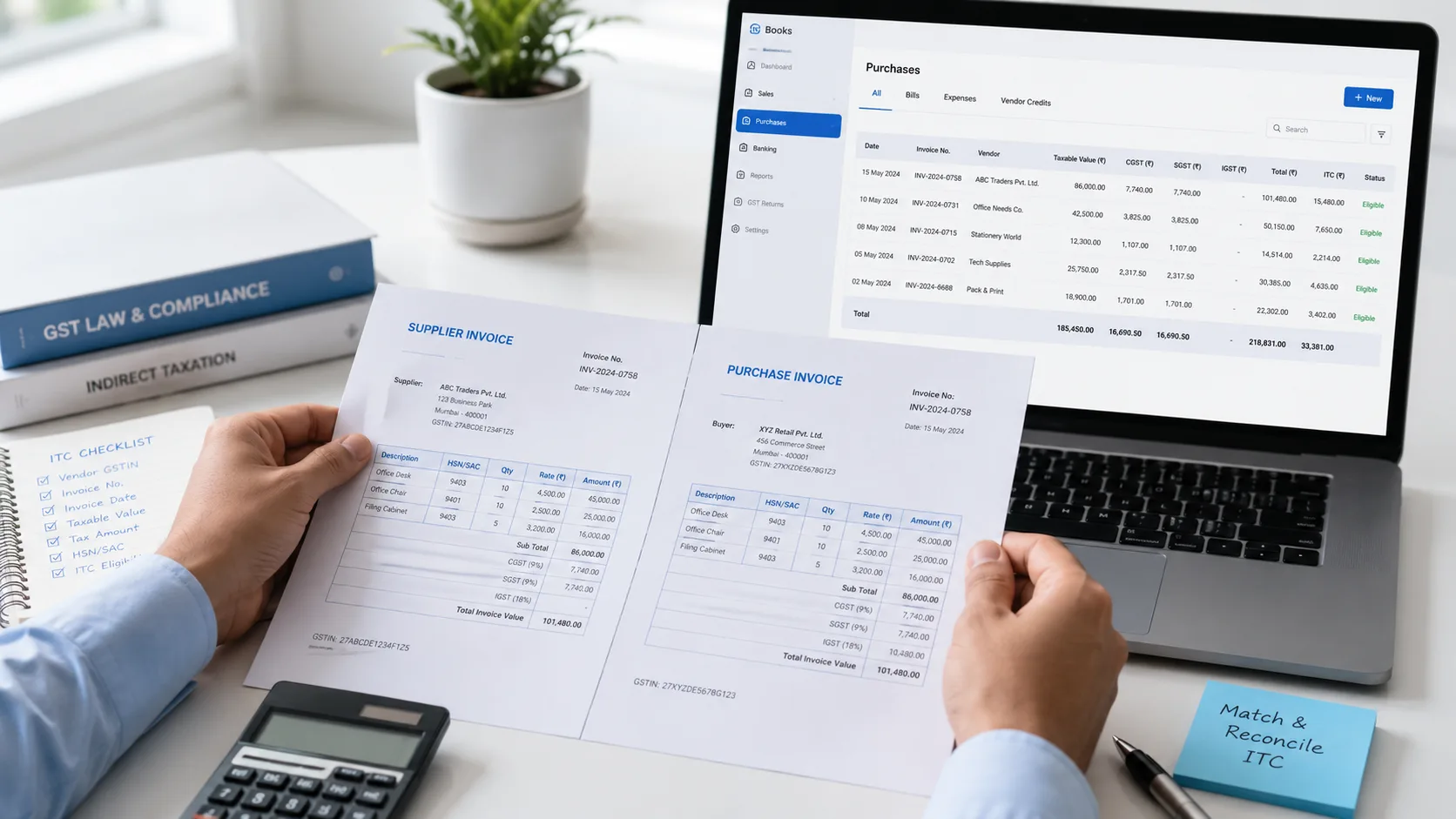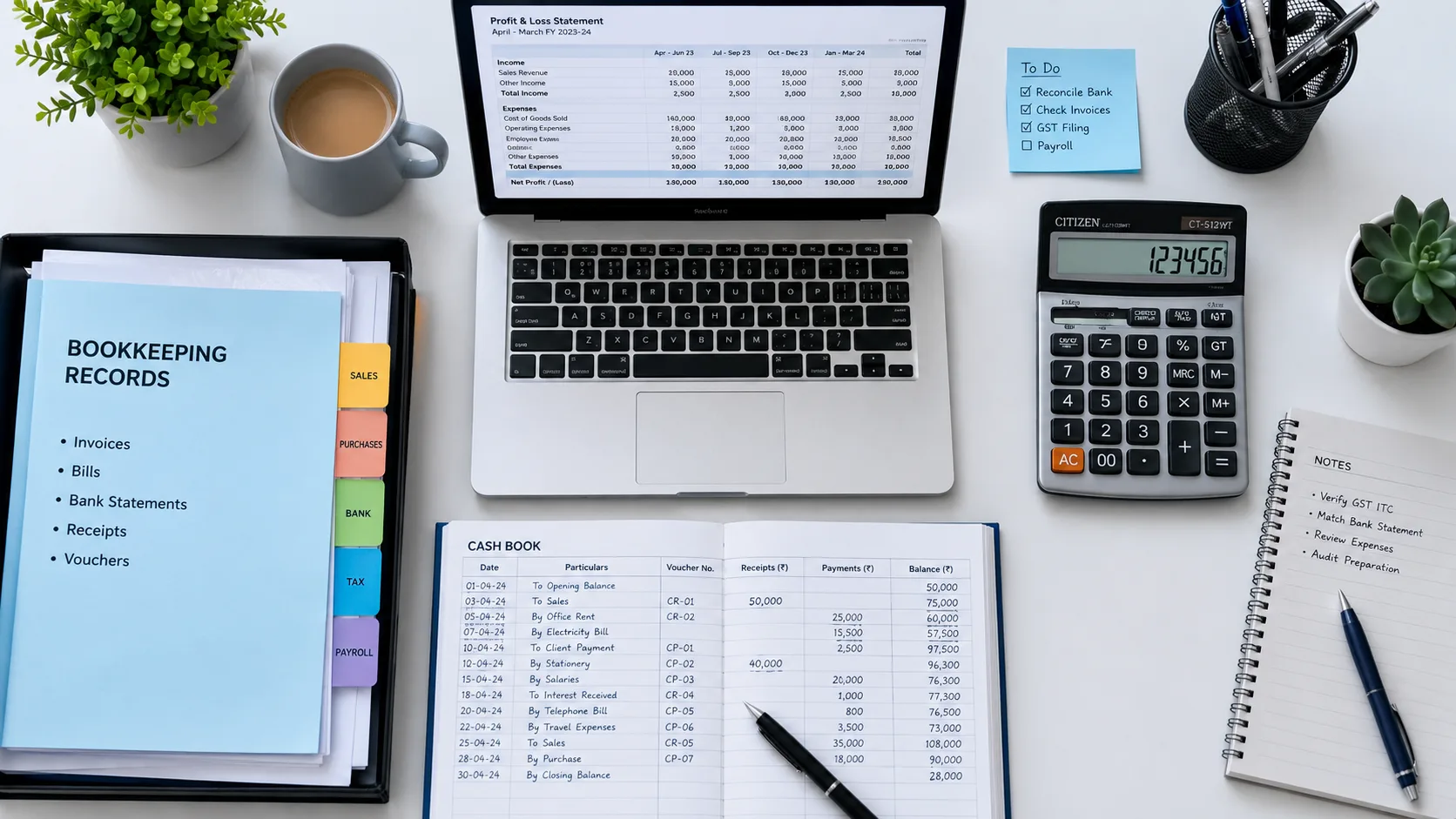
Nobody starts a business excited about bookkeeping. But the businesses that breeze through audits, while their peers scramble for receipts and pray their bank statements match, all share one thing: a handful of small, consistent habits practiced every month.
- Reconcile your bank monthly — the single highest-impact habit.
- Photograph receipts the day you get them; thermal paper fades.
- Categorise expenses as they happen and keep the chart of accounts simple.
- Separate business and personal finances completely, and close the books by the 10th.
Good bookkeeping isn't about being an accounting expert. It's about building routines so simple that you do them without thinking. Here are the habits that separate audit-ready businesses from audit-panicked ones.
Reconcile your bank accounts monthly
This is the single highest-impact habit on this list. Bank reconciliation means matching every transaction in your accounting software with the corresponding entry in your bank statement. It catches:
- Duplicate entries and missed recordings
- Unauthorised debits you might not notice for months
- Timing differences between when you record an expense and when the money actually moves
Set a recurring task for the 5th of every month: download last month's bank statement, open your books, and match them line by line. It takes 20 to 30 minutes for most small businesses. The payoff is enormous, a reconciled bank account is the foundation auditors check first.
“An auditor who sees clean bank reconciliations from day one already trusts your books more. That trust translates directly into fewer questions, shorter timelines and lower audit fees.”
Photograph receipts the day you get them
Paper receipts fade, get lost and end up as unidentifiable smudges in a shoebox. Digital copies don't. The rule is simple: if you spent money on behalf of the business, photograph the receipt the same day.
Use your phone's camera or a dedicated app, the tool matters less than the consistency. What matters is that six months from now, when an auditor asks for the receipt behind a ₹14,000 office supply purchase, you can produce it in 30 seconds instead of 30 minutes of searching.
Categorise expenses as they happen
The worst time to categorise three months of expenses is the night before your accountant needs them. The best time is when you make the purchase.
Keep your chart of accounts simple. For most small businesses, 15 to 20 categories are enough:
- Rent and utilities
- Salaries and contractor payments
- Software and subscriptions
- Travel and conveyance
- Professional fees
- Marketing and advertising
- Office supplies and equipment
- Bank charges and interest
When a new expense doesn't fit any existing category, don't create a one-off bucket. Ask your accountant which category it belongs in, and note it for next time.
Separate personal and business finances completely
This is non-negotiable, and yet it's the most violated rule in small business accounting. When personal and business transactions flow through the same bank account, every reconciliation becomes an exercise in forensics.
- Open a dedicated business bank account, even as a sole proprietor.
- Pay yourself a fixed monthly draw or salary, and treat it like any other expense.
- Never use the business account for personal purchases, and never deposit personal funds into it without documenting it as a capital contribution.
Close your books by the 10th of the following month
A “monthly close” sounds corporate, but it's just a checklist:
- All invoices for the month are raised and recorded.
- All expenses are entered and categorised.
- Bank reconciliation is complete.
- Outstanding receivables are reviewed (who owes you money, and is it overdue?).
- GST data is reconciled and ready for return filing.
Do this by the 10th, and your GST returns practically file themselves. Your accountant gets clean data. Your auditor gets a business that clearly has its house in order.
The 30-minute monthly routine
All of this sounds like a lot, but in practice, it takes about 30 minutes per month for a small business with under 100 transactions. The trick is doing it monthly, not letting it pile up into a quarterly or (worse) annual panic.
The five habits at a glance
| Habit | How often | Why it matters |
|---|---|---|
| Bank reconciliation | Monthly, by the 5th | Catches errors, fraud and timing gaps auditors check first |
| Photograph receipts | Same day | Preserves proof before thermal paper fades and deductions vanish |
| Categorise expenses | As they happen | Keeps the chart of accounts clean and returns easy to file |
| Separate finances | Always | Turns reconciliation from forensics into a five-minute match |
| Monthly close | By the 10th | Delivers clean data for GST returns and a stress-free audit |
Frequently asked questions
Do I really need bookkeeping software as a small business?
Not necessarily, but you need a consistent system. A simple spreadsheet works when transactions are few; software helps once volume grows. See our bookkeeping basics guide.
Should I use Tally or hire an accountant?
They solve different problems: software records transactions, an accountant interprets them and keeps you compliant. Most small businesses need a bit of both. See our Tally vs accountant comparison.
How long should I keep my books and receipts?
Keep accounting records and supporting documents for at least eight years from the end of the relevant financial year, as required under the Income Tax and GST rules.
If bookkeeping still feels like a chore, hand it off. FilingSetu's monthly bookkeeping service handles reconciliation, categorisation and close, so your books are always audit-ready and you can focus on the work that actually grows your business.