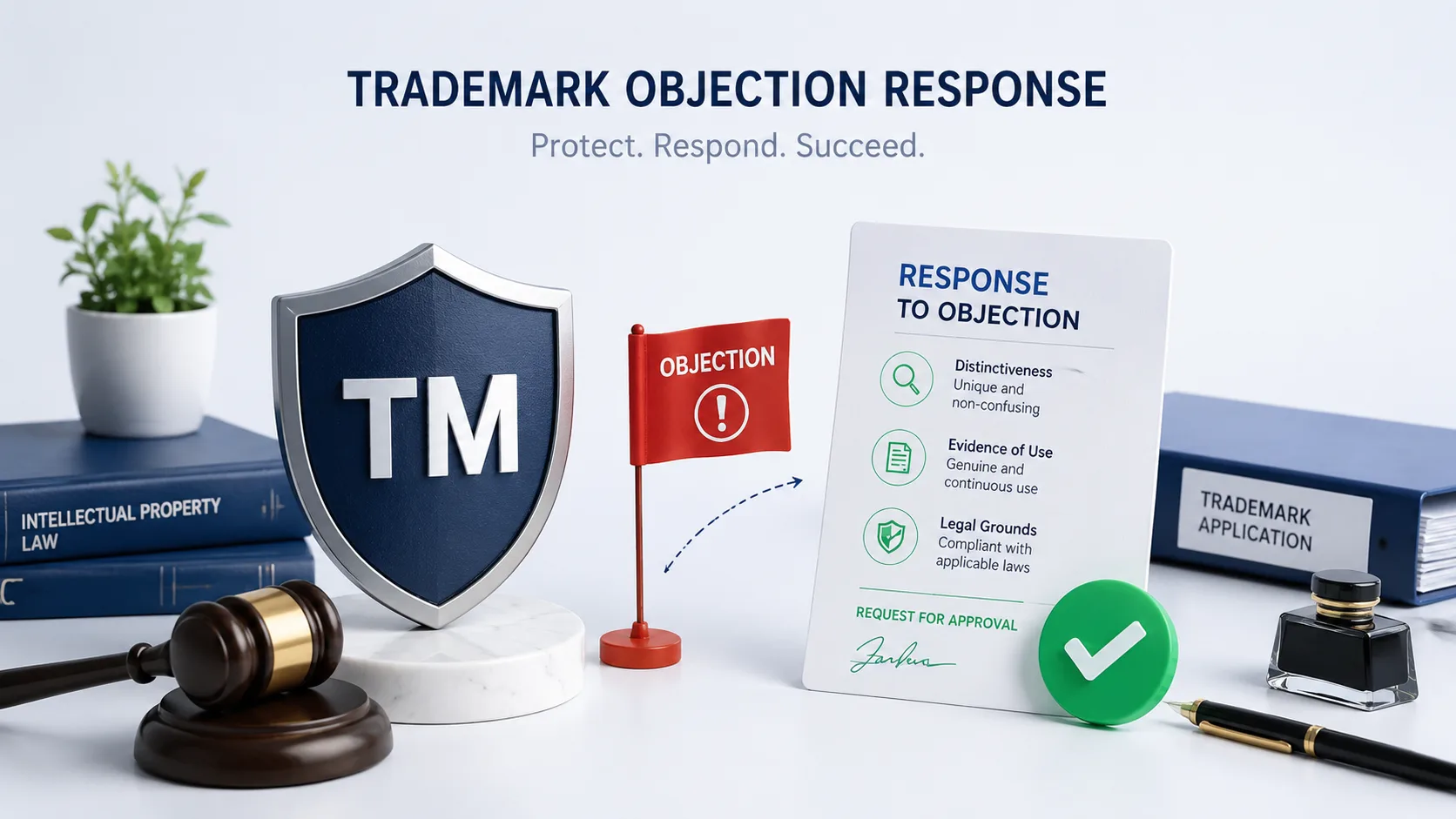
Getting a trademark objection can feel like the end of the road. It is not. Objections are a routine part of the process, and most are answerable with a well-drafted reply. This guide explains the two hurdles — examination objection and opposition — the grounds behind each, the strict deadlines, and how to respond.
- An objection is not a rejection — most are answerable with a strong reply.
- Examination objections come from the registry, on absolute or relative grounds.
- Opposition comes from a third party after your mark is published.
- Reply deadlines are strict — miss one and the application is treated as abandoned.
Objection vs opposition
| Examination objection | Opposition | |
|---|---|---|
| Raised by | The Trade Marks Registry | A third party |
| Stage | After examination | After journal publication |
| Response | Written reply + hearing | Counter-statement, evidence, hearing |
Examination objection
The registry may object on absolute grounds (the mark is descriptive or non-distinctive) or relative grounds (it is similar to an existing mark). You respond with a written reply — and often a hearing — arguing distinctiveness, prior use, or distinguishing your mark from the cited ones.
Opposition
After publication in the journal, a third party can oppose your mark within the prescribed window. This runs like a mini-litigation: notice of opposition, counter-statement, evidence affidavits and a hearing. A strong, timely, evidence-backed response is what decides it.
“The deadline to reply to a trademark objection is strict. Miss it and the application is treated as abandoned — no matter how strong your case.”
Frequently asked questions
Does an objection mean my trademark is rejected?
No. It is a query or challenge you can answer. Many marks proceed to registration after a well-drafted reply and, where needed, a hearing.
Can I still use my brand while an objection is pending?
Yes, you can continue using ™. You just cannot use ® until the mark is registered.
What happens if someone opposes my mark?
You file a counter-statement and evidence within the deadline. The registry then decides after a hearing. Ignoring an opposition leads to the application being deemed abandoned.
Our trademark service drafts objection replies and handles oppositions through to registration. See all registration services.